Road Bike Tire Pressure: The Science Behind Optimal Inflation

Illustration: Why Modern Road Bike Tire Pressure Is Lower Than You Think

Modern road bike tire pressure science shows that lower pressures (60–90 PSI for 28mm+ tires) actually provide better speed, comfort, and grip than the traditional 120+ PSI approach. The old “max pressure” advice is wrong, and studies have proven that too much air pressure makes your bike bounce over road imperfections, wasting energy and slowing you down.

Road Bike Tire Pressure: The Science Behind Optimal Inflation

  • Modern optimal range: 60–90 PSI for 28mm+ tires provides lower rolling resistance than 120+ PSI
  • Weight adjustment: ±1% per 10kg from 70kg base weight
  • Surface matters: rough roads need lower pressure for speed and comfort
  • Tubeless advantage: 3–5 PSI lower pressure possible without pinch flat risk

Why Modern Road Bike Tire Pressure Is Lower Than You Think
Illustration: Why Modern Road Bike Tire Pressure Is Lower Than You Think

The science of tire pressure has completely changed in recent years. Studies by Bicycle Quarterly have shown that higher pressures actually roll slower on typical road surfaces. The old advice of pumping tires to the maximum PSI printed on the sidewall is wrong for most riders.

The Science Shift: Higher Pressure Actually Rolls Slower

The physics behind this is simple but counterintuitive. When your tire pressure is too high, your bike bounces over small bumps and road imperfections instead of rolling smoothly over them. This vertical movement wastes energy that should be going forward. Studies have proven that a tire’s ability to deform slightly to the road surface actually maintains forward momentum better than a rock-hard tire.

The energy loss from bouncing over bumps is called “suspension loss.” On real roads with cracks, potholes, and uneven surfaces, this loss can be significant. A tire that’s too hard acts like a pogo stick, while a properly inflated tire acts like a suspension system, keeping your wheels in contact with the road and your power going forward.

Modern Optimal Pressure Ranges by Tire Width

Tire width plays a crucial role in determining optimal pressure. Wider tires have more air volume, which means they can operate at lower pressures while still supporting your weight. Here’s the science-backed pressure ranges for different tire widths:

Tire Width Pressure (bar) Pressure (PSI)
25mm 6.5–8 95–115
28mm 5.5–7.5 80–110
30mm 4.5–6.5 65–95
32mm 4–6 60–85

The key insight is that wider tires can use significantly lower pressures. A 30mm tire at 65 PSI will typically roll faster and feel more comfortable than a 25mm tire at 110 PSI on the same road surface.

The Science of Weight, Width, and Surface
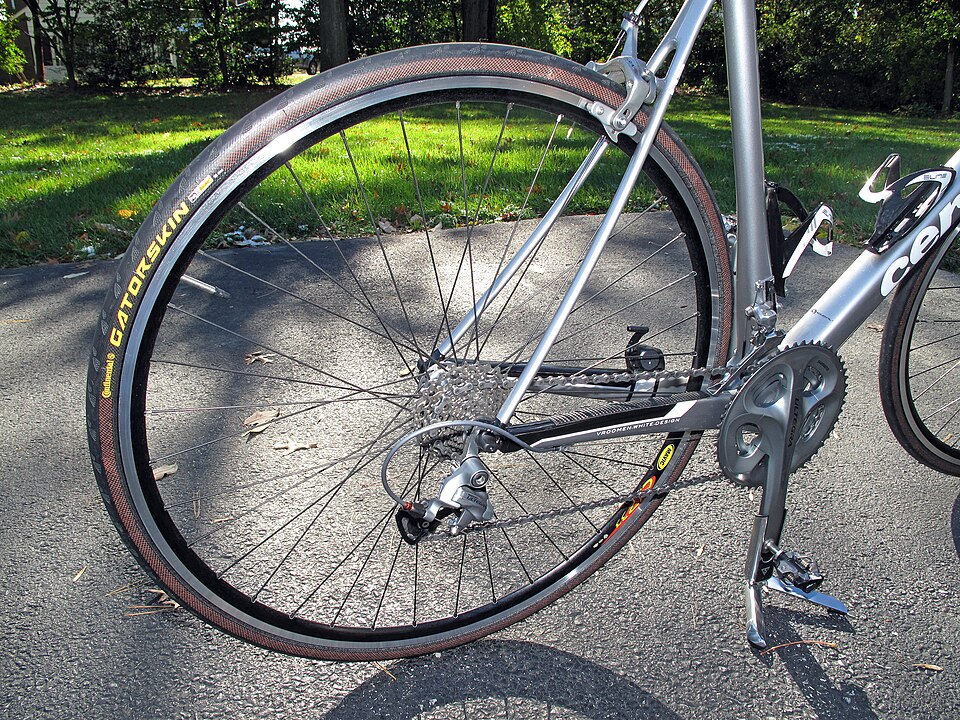
Illustration: The Science of Weight, Width, and Surface

Your body weight and the road surface you ride on are the two biggest factors affecting optimal tire pressure. Understanding how to adjust for these variables can dramatically improve your riding experience.

Rider Weight Adjustment: The 1% Per 10kg Rule

Your weight directly affects how much your tires deform under load. Heavier riders need higher pressure to prevent the tire from bottoming out on bumps, while lighter riders can use lower pressures for better comfort and grip. The science-backed formula is simple: adjust by 1% per 10kg up or down from a 70kg base weight.

For example, if you weigh 80kg (about 176 pounds), you’re 10kg above the base weight, so you’d add 10% to the recommended pressures. If you weigh 60kg (about 132 pounds), you’re 10kg below, so you’d subtract 10%. This adjustment ensures your tires maintain the right shape and contact patch for your weight.

Surface Conditions: Smooth vs Rough Road Performance

The road surface you ride on dramatically affects optimal pressure. On perfectly smooth pavement, higher pressure can be slightly faster because there’s less tire deformation. However, real-world roads are rarely perfectly smooth, and this is where the science gets interesting.

On rough surfaces like cobblestones, chip seal, or poor-quality tarmac, lower pressure is significantly faster. The reason is that a slightly softer tire absorbs vibrations and maintains better contact with the road surface. When a hard tire hits a bump, it bounces upward, losing forward momentum. A properly inflated tire rolls over the bump smoothly, maintaining speed and comfort.

Pressure Distribution: Front vs Rear Tire

Your rear tire carries more weight than your front tire, especially when you’re riding in the saddle. This means your rear tire needs slightly higher pressure than your front for optimal performance. The science shows that a pressure difference of 2-3 PSI between front and rear provides the best balance of comfort, grip, and rolling resistance.

A good rule of thumb is to set your rear tire at about 5% higher pressure than your front tire. This small adjustment accounts for the weight distribution and ensures both tires are operating at their optimal pressure for your riding position.

Tubeless vs Tubes: The 3-5 PSI Difference
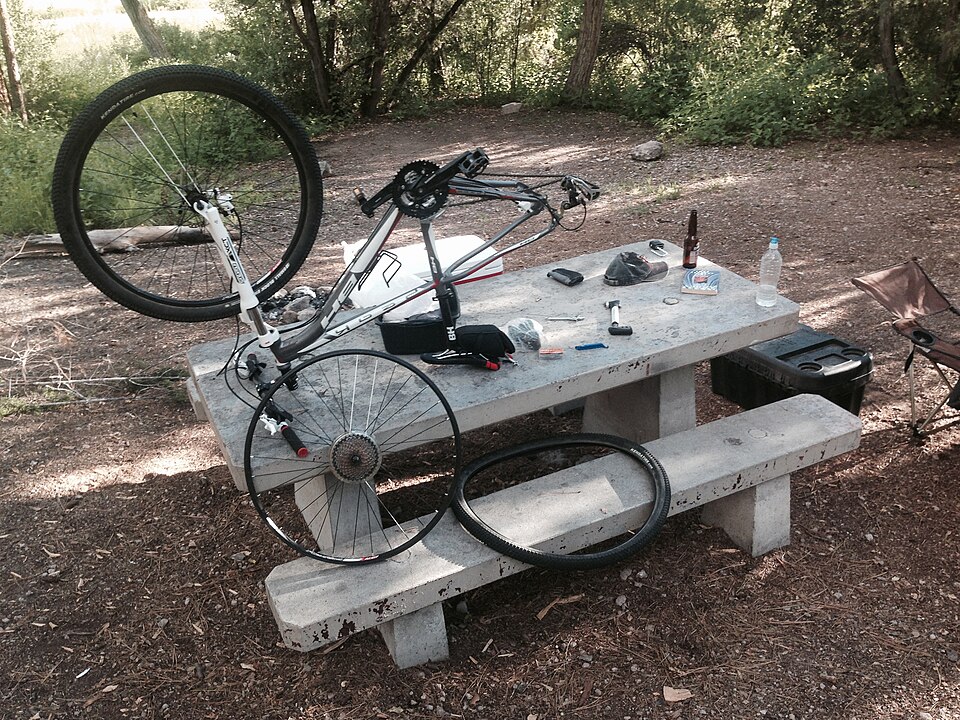
Illustration: Tubeless vs Tubes: The 3-5 PSI Difference

Tubeless tire technology has revolutionized road cycling, and one of its biggest advantages is the ability to run lower pressures safely. The science behind this is straightforward: tubeless tires eliminate the risk of pinch flats, which allows you to reduce pressure without worrying about snake bites.

Why Tubeless Allows Lower Pressure

With traditional tubed tires, if you hit a sharp edge like a pothole or rock at low pressure, the tube can get pinched between the tire and rim, causing a flat. This “pinch flat” risk forces riders to use higher pressures than optimal for comfort and grip. Tubeless tires eliminate this risk because there’s no tube to pinch.

The science shows that tubeless tires can safely run 3-5 PSI lower than their tubed equivalents. This pressure reduction translates to noticeably better comfort, improved traction in corners, and often slightly faster rolling speeds on rough surfaces. The lower pressure also allows the tire to conform better to the road, increasing the contact patch and improving grip.

Fine-Tuning Your Pressure: Test and Experiment

Finding your perfect tire pressure is both a science and an art. The research data provides excellent starting points, but your specific riding conditions, tire model, and personal preferences all play a role in finding the optimal setup.

Start with a digital pressure gauge, as they’re much more accurate than the gauges on most floor pumps. Begin at the lower end of the recommended range for your weight and tire width, then go for a ride. If the ride feels harsh or you feel “skittish” in corners, lower your pressure by 2-3 PSI. If you’re bottoming out on bumps or feeling unstable, add a bit of pressure.

The key is to experiment systematically. Change one variable at a time, and pay attention to how your bike feels on different surfaces. Many riders are surprised to find that they’ve been riding with too much pressure for years, sacrificing comfort and speed without realizing it.

The most surprising insight is that too much pressure actually slows you down on real roads by making your bike bounce over imperfections. Your specific action step: this weekend, lower your pressure by 5 PSI from your current setting and see if your ride feels smoother and faster on your typical routes.

For more road cycling tips and maintenance advice, check out our complete guide to road cycling maintenance, or learn about essential cycling gear for women. If you’re just starting out, our beginner cycling training plan can help you build fitness safely while you experiment with optimal tire pressure.
Road Bike Suspension Systems: Comfort vs Performance Trade-offs

Illustration: How Road Bike Suspension Systems Work

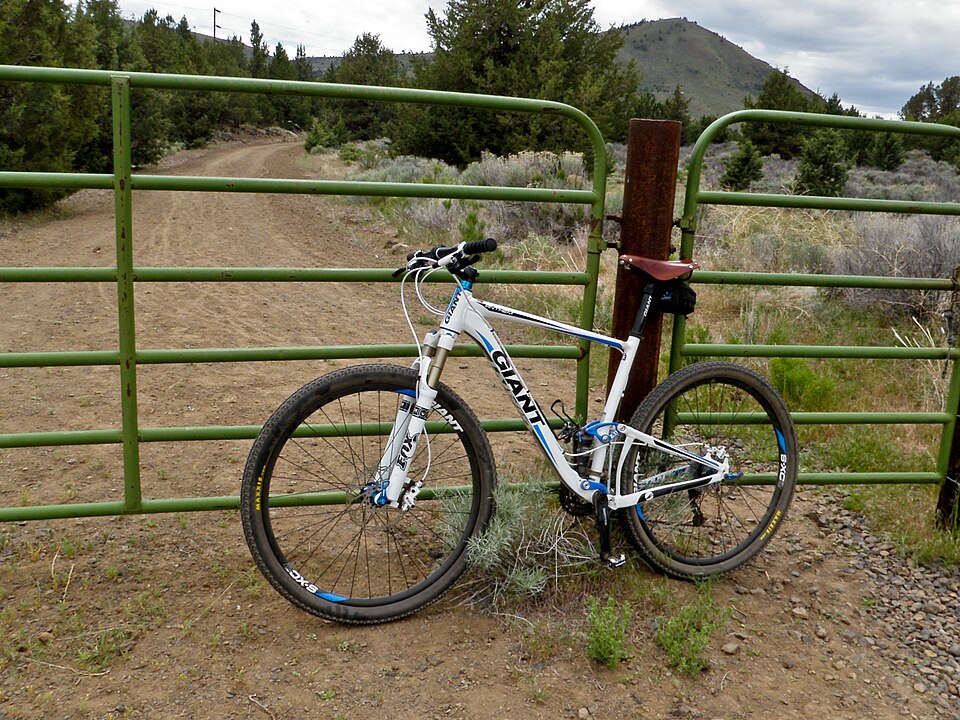
Road bike suspension systems can reduce vibrations by up to 30%, but this comfort comes at a cost. While traditional road bikes are rigid, modern endurance designs now incorporate small amounts of suspension to manage the trade-off between comfort and performance. For those new to the sport, understanding these differences is crucial, and road cycling fundamentals can help you make informed decisions.

Road bike suspension: when it helps and when it hurts

  • Comfort benefits: reduces fatigue, improves traction, and absorbs vibrations by up to 30%
  • Performance drawbacks: adds weight, causes energy loss, and requires maintenance
  • Surface matters: suspension helps on rough roads but hurts on smooth pavement
  • Modern solution: lockouts let you disable suspension on smooth roads

How Road Bike Suspension Systems Work

Illustration: How Road Bike Suspension Systems Work

Road bike suspension systems aim to balance comfort, such as reducing fatigue and absorbing vibrations, with performance factors like maintaining traction and handling on rough roads.

Specialized Future Shock vs Trek IsoSpeed vs Suspension Seatposts

  • Specialized Future Shock: Provides 20mm of vertical suspension with adjustable damping in version 3.0, using a piston-based mechanism inside the head tube
  • Trek IsoSpeed: Decouples the seat tube from the top tube, allowing the seat post to flex backward to absorb vibrations through a pivot point
  • Suspension Seatposts: Offer 40mm of travel, with the Specialized Future Shock Seatpost being a prime example, while aftermarket options like the Redshift ShockStop provide roughly 20mm travel

Each system achieves comfort differently: Future Shock uses a hydraulic piston that compresses vertically when hitting bumps, IsoSpeed relies on a mechanical pivot that allows the seat tube to move independently from the frame, and suspension seatposts use telescoping posts with internal springs or elastomers that compress under load. The travel distance varies significantly — 20mm for Future Shock and Redshift ShockStop versus 40mm for dedicated suspension seatposts — affecting how much vibration they can absorb.

How Suspension Absorbs Road Vibrations

Suspension components work by converting the kinetic energy from road impacts into heat through damping mechanisms. When your wheel hits a bump, the suspension compresses, absorbing the shock before it travels up through your frame and into your body. This process reduces the high-frequency vibrations that cause hand numbness and arm fatigue on long rides.

The physics behind vibration reduction involves isolating your body from road irregularities. Instead of feeling every pebble and crack, the suspension absorbs these impacts, allowing your tires to maintain better contact with the ground. This tracking ability improves traction for better cornering and braking, especially on rough surfaces. Research suggests these specialized stems and suspension components can reduce vibrations by up to 30%, making a significant difference in rider comfort over long distances.

Comfort Benefits vs Performance Drawbacks

Illustration: Comfort Benefits vs Performance Drawbacks

Comfort & Control Benefits: Suspension systems reduce the impact of road irregularities, which mitigates fatigue and reduces hand numbness. By keeping tires in contact with the ground, suspension can improve traction for better cornering and braking.

Comfort Benefits: Fatigue Reduction and Traction Control

  • Fatigue Reduction: Absorbs constant micro-impacts from rough roads, allowing you to ride longer with less exhaustion
  • Hand Numbness Prevention: Isolates your hands from road vibrations, particularly beneficial on endurance rides
  • Improved Traction Control: Better tire contact with road surface provides superior grip for cornering and more effective braking
  • Arm Fatigue Reduction: Reduces the high-frequency vibrations that cause arm pump and discomfort on long rides

Suspension systems offer several specific comfort benefits that make long rides more enjoyable. First, they significantly reduce fatigue by absorbing the constant micro-impacts from rough roads. Instead of your body absorbing every bump, the suspension takes that punishment, allowing you to ride longer with less exhaustion. This is particularly valuable on endurance rides where accumulated fatigue can be the limiting factor. For beginners looking to maximize their riding experience, Essential Cycling Tips for Beginners Starting Their Journey can provide valuable insights.

Second, suspension prevents hand numbness and arm fatigue by isolating your hands from road vibrations. This is particularly beneficial on endurance rides where constant vibration can lead to discomfort and reduced control. The reduction in high-frequency vibrations means your hands and arms don’t experience the same level of fatigue, allowing you to maintain better control throughout your ride. For female cyclists, Essential Cycling Gear for Women: What You Really Need can help you find the right equipment for maximum comfort.

Third, improved traction control comes from better tire contact with the road surface. When your tires maintain consistent contact, you get better grip for cornering and more effective braking, especially on uneven surfaces. This enhanced control can actually make you feel more confident on technical descents and in wet conditions where traction is crucial.

Performance Drawbacks: Weight and Energy Loss

  • Weight Penalty: Typically adds 200-400 grams to your bike, noticeable on climbs and accelerations
  • Mechanical Complexity: More parts that can wear out or require adjustment, adding to maintenance burden
  • Pedal Bob: Rider power absorbed by suspension rather than moving the bike forward, particularly when standing or accelerating
  • Energy Efficiency Loss: Suspension movement wastes power that could be used for propulsion

Added components increase weight, which is detrimental to climbing, and introduce mechanical complexity that requires maintenance. Suspension can introduce “pedal bob” or energy loss, where rider power is absorbed by the suspension rather than moving the bike forward, particularly when standing or accelerating.

The weight penalty varies by system but typically adds 200-400 grams to your bike. This extra weight becomes noticeable on climbs and accelerations where every gram matters. For competitive cyclists, this weight difference can be the deciding factor in race situations where marginal gains are crucial.

The mechanical complexity means more parts that can wear out or require adjustment, adding to your maintenance burden. Suspension components need periodic servicing, seal replacement, and damping adjustments to maintain optimal performance. This ongoing maintenance requirement is a significant consideration for riders who prefer low-maintenance setups. To keep your bike in top condition, consider following a Complete Bike Maintenance Checklist Every Cyclist Should Follow.

Pedal bob occurs when your pedaling motion causes the suspension to compress and rebound repeatedly. This energy loss means some of your power output goes into moving the suspension rather than propelling the bike forward. The effect is most pronounced when standing or during hard accelerations, where the suspension can feel like it’s absorbing your effort rather than transferring it to forward motion.

When Suspension Helps vs Hurts Your Speed

Illustration: When Suspension Helps vs Hurts Your Speed

For smooth pavement, suspension is often unnecessary and offers a net disadvantage in speed due to added weight and reduced efficiency. However, on cobblestones or very rough roads, suspension can be faster than rigid frames.

The “Optimum Surface” Argument: Smooth vs Rough Roads

  • Smooth Pavement: No benefit, actually slower due to weight and energy loss from pedal bob
  • Cobblestones: Suspension can be faster by reducing violent bouncing and maintaining power output
  • Chip Seal: Moderate benefit depending on roughness level and rider fatigue tolerance
  • Gravel Paths: Significant advantage for comfort and traction, potentially improving average speed

On smooth pavement, suspension provides no benefit and actually slows you down. The added weight and energy loss from pedal bob make rigid frames more efficient for racing and fast group rides on good roads. Professional cyclists typically avoid suspension on smooth surfaces because the performance penalty outweighs any comfort gains. In fact, the energy lost through suspension movement can be measured in watts — potentially 10-20 watts of power lost to suspension compression during hard efforts.

However, on rough surfaces like cobblestones, chip seal, or gravel paths, suspension can actually make you faster. The improved traction and reduced fatigue allow you to maintain higher average speeds over long distances. On cobblestones specifically, suspension can reduce the violent bouncing that occurs on rigid frames, allowing you to stay in the saddle and maintain power output. Professional riders in events like Paris-Roubaix have shown that suspension-equipped bikes can be faster on extremely rough terrain despite the weight penalty.

The key is matching your suspension choice to your typical riding surface. If you primarily ride smooth roads, skip the suspension. If you regularly encounter rough pavement or cobblestones, suspension could provide a net performance benefit despite the weight penalty. The crossover point where suspension becomes beneficial typically occurs on surfaces with frequent, high-magnitude impacts that would otherwise cause significant rider fatigue. For those looking to explore new terrain, Finding the Best Cycling Routes Near You: A Local Guide can help you discover the perfect routes for your riding style.

Lockout Systems: The Best of Both Worlds

Many modern systems feature “lockouts,” allowing riders to deactivate the suspension on smooth roads to maximize pedaling efficiency, combining the benefits of both setups. Lockout systems work by essentially stiffening the suspension, preventing it from compressing under normal riding conditions.

This technology solves the traditional suspension dilemma by giving you comfort when you need it and efficiency when you don’t. On smooth roads, you can lock out the suspension to eliminate weight and energy loss. When you hit rough sections, you can unlock it to get the comfort and traction benefits. Most modern lockouts can be activated remotely from the handlebars, allowing you to make adjustments without taking your hands off the grips.

The effectiveness of lockout systems varies by design, but most allow you to switch between locked and active modes in seconds. This flexibility makes modern suspension systems much more practical for riders who encounter mixed terrain conditions. Some advanced systems even feature semi-active suspension that automatically adjusts based on terrain input, though these remain relatively rare in road bike applications.

The decision between suspension and wider tires ultimately depends on your riding terrain. If you primarily ride smooth pavement, skip the suspension and invest in 32mm+ tires at lower pressure for comfort without the weight penalty. But if you regularly face cobblestones or rough chip seal, a suspension system with lockout could actually make you faster. Before buying, test ride both setups on your typical routes to feel the difference yourself.

Consider your riding style and priorities when making this decision. Endurance riders who prioritize comfort on long rides may find the vibration reduction worth the performance penalty, while competitive racers on smooth roads will likely prefer the efficiency of a rigid frame. The technology continues to evolve, with newer systems becoming lighter and more efficient, potentially narrowing the performance gap in the future. If you’re just starting out, a Beginner Cycling Training Plan: Build Your Fitness Safely can help you develop the fitness needed to enjoy longer rides with or without suspension.

Road Bike Geometry Explained: How Frame Design Affects Performance

Illustration: Stack and Reach: The Foundation of Your Riding Position

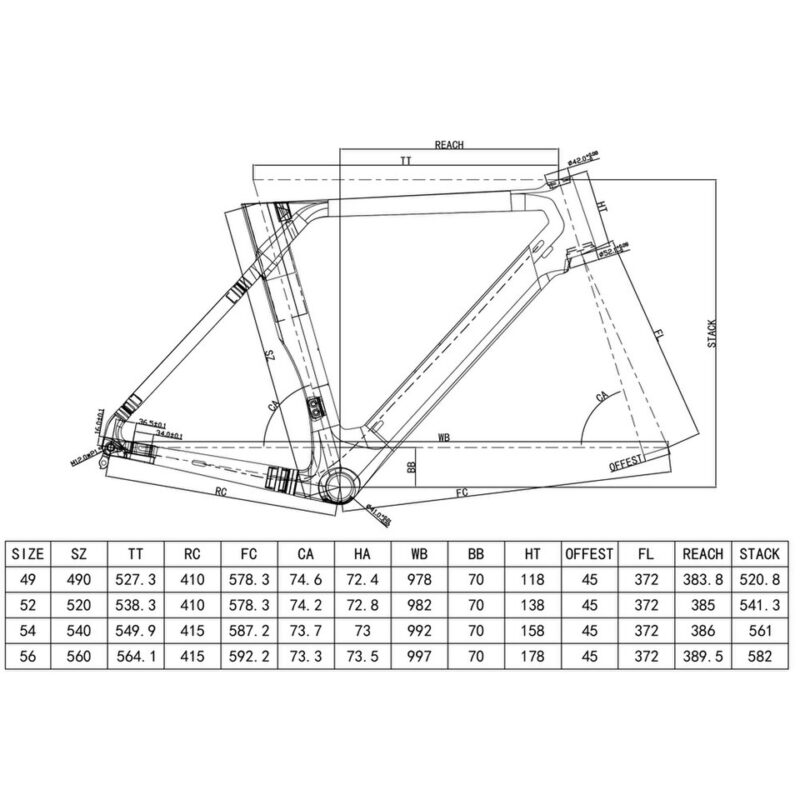
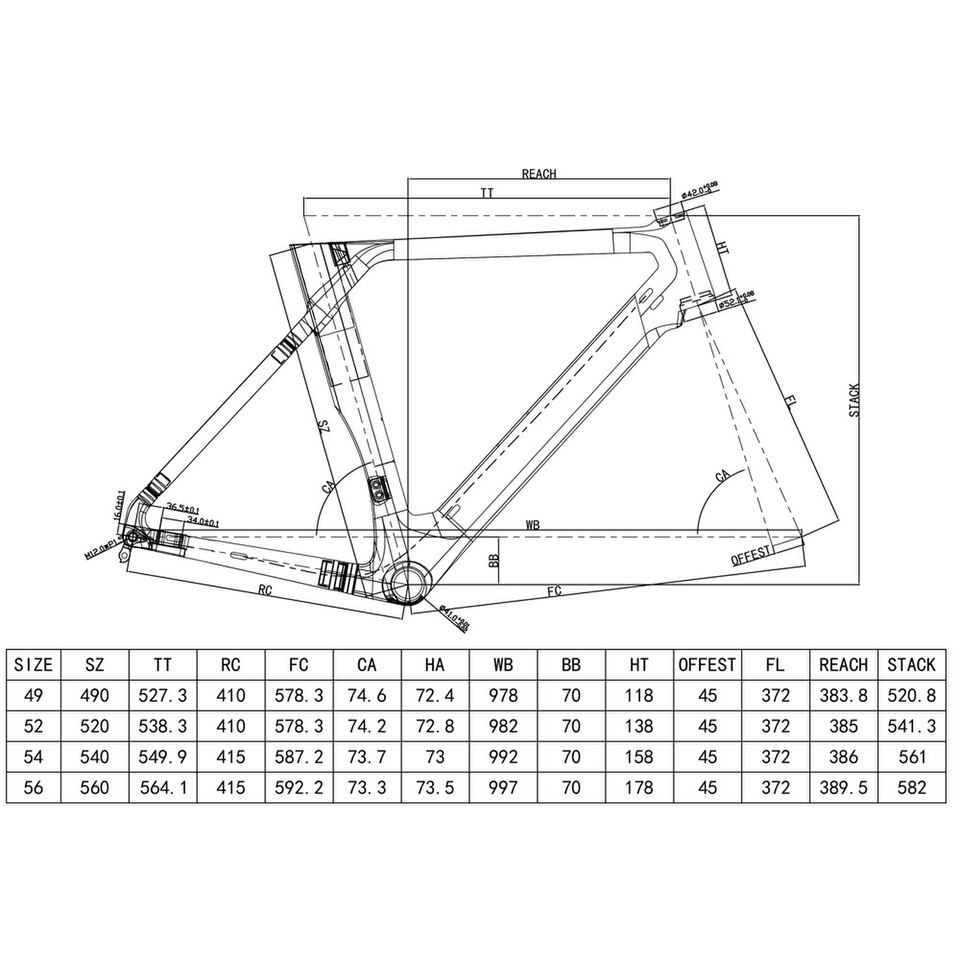
Road bike geometry determines whether you’ll win a criterium or finish a century comfortably — the difference between 73° and 71° head tube angle can mean the difference between twitchy cornering and stable descending.

Road bike geometry affects every aspect of your ride

  • Stack and reach determine your fit — low stack = aerodynamic, long reach = speed
  • Head tube angle controls steering — steeper = quicker, slacker = more stable
  • Wheelbase and chainstays balance stability and agility — short = responsive, long = comfortable
  • Race geometry prioritizes speed; endurance geometry prioritizes comfort
  • Modern frames with wider tire clearance improve comfort without sacrificing performance

Stack and Reach: The Foundation of Your Riding Position

Illustration: Stack and Reach: The Foundation of Your Riding Position

Stack and reach are the most important measurements for sizing and fit. These two dimensions determine your body position on the bike and directly impact both comfort and performance. Understanding how they work together is essential for choosing the right bike for your riding style.

Stack Height: How Vertical Position Affects Aerodynamics and Comfort

Stack is the vertical distance from the bottom bracket to the top of the head tube. A low stack means a lower, more aerodynamic (aggressive) position. According to Canyon’s geometry research, reducing stack by just 10mm can decrease wind drag by 1.5–2%, making a significant difference in racing scenarios. However, this aggressive position comes at a cost — lower stack places more strain on your back and neck, making it less suitable for long-distance endurance rides where comfort becomes paramount.

Race-oriented road bikes typically feature stack heights ranging from 500-550mm for size medium frames, while endurance bikes extend to 550-600mm for the same size. This 50mm difference translates to a dramatically different riding experience. Professional time trialists often use stack heights as low as 480mm to maximize aerodynamic efficiency, but this position requires exceptional core strength and flexibility. For recreational riders, a stack height that allows a 45-degree torso angle typically provides the best balance between aerodynamics and comfort.

The relationship between stack and handlebar height is equally important. A bike with low stack but high-rise handlebars can feel more comfortable than a bike with moderate stack and flat handlebars. This is why many endurance bikes feature taller head tubes that accommodate more spacers and angled stems, allowing riders to fine-tune their position without changing the frame’s fundamental geometry.

Reach Length: Horizontal Stretch and Power Transfer

Reach is the horizontal distance from the bottom bracket to the top of the head tube. A longer reach stretches the rider out, increasing speed potential but reducing comfort. The extended position allows for better power transfer and a more aerodynamic profile, which is why race bikes feature longer reaches. In contrast, endurance bikes use shorter reaches to create a more upright, comfortable posture that reduces strain during long rides. The trade-off is clear: aggressive reach maximizes speed but can lead to back fatigue on rides over 50 miles.

Typical reach measurements for size medium road bikes range from 385-395mm for race geometry and 375-385mm for endurance geometry. This 10-15mm difference significantly impacts how the bike feels and performs. Longer reach positions the rider’s weight further forward, improving front-wheel traction during climbing and creating a more aggressive cornering stance. However, it also increases strain on the lower back and hamstrings, particularly during sustained efforts.

Modern bike fitting emphasizes the importance of matching reach to your body proportions. Riders with longer torsos often benefit from bikes with extended reach, while those with shorter torsos may find standard race geometry uncomfortable. The key is finding a position where you can maintain power output while staying relaxed enough to ride for hours. Many professional bike fitters use the “knee over pedal spindle” (KOPS) method as a starting point, then adjust reach based on the rider’s flexibility and riding goals.

Head Tube Angle: Steering Responsiveness and Handling

Head tube angle (HTA) defines steering responsiveness and dramatically affects how a bike handles different riding conditions. This critical measurement, typically ranging from 71° to 74.5°, determines whether your bike feels like a nimble race machine or a stable endurance platform.

Steeper Head Tube Angles (73°–74.5°): Quick Handling for Racing

Steeper head tube angles, ranging from 73° to 74.5°, create quicker, twitchier handling that’s ideal for criteriums and agile cornering. This geometry makes the bike feel more responsive and nimble, allowing for rapid direction changes and precise line selection through tight turns. Race bikes use these steeper angles because they provide the sharp handling needed in competitive scenarios where every fraction of a second counts. The trade-off is that steeper angles can feel less stable at high speeds, especially on technical descents.

The steering dynamics of steeper angles become particularly evident in criterium racing, where courses feature tight 180-degree turns and frequent accelerations. Bikes with 73.5° or 74° head angles can change direction almost instantly, allowing riders to maintain momentum through corners and position themselves strategically in the peloton. However, this responsiveness requires constant attention from the rider — the bike wants to turn with minimal input, which can be fatiguing over long distances.

Professional racers often prefer head angles between 73.5° and 74° for road racing, while time trial specialists might use angles as steep as 74.5° to maximize responsiveness in the aero position. The steeper the angle, the more the front wheel wants to turn with minimal handlebar input, creating that characteristic “twitchy” feel that experienced racers learn to control instinctively. For amateur racers, this level of responsiveness can be both exciting and challenging, requiring practice to master.

Slacker Head Tube Angles (71°–72°): Stable Descending and High-Speed Confidence

Slacker head tube angles, ranging from 71° to 72°, create slower, more stable handling that provides confidence at high speeds and on descending. This geometry makes the bike feel planted and predictable, which is crucial when navigating fast descents or riding in windy conditions. Endurance bikes and touring bikes favor slacker angles because they prioritize stability over quick handling. The more relaxed steering response means you sacrifice some agility in tight corners, but gain confidence when the road points downhill or becomes technical.

The stability benefits of slacker angles become most apparent during high-speed descents and in crosswinds. A bike with a 71.5° head angle will track straighter through gusty conditions and feel more composed when descending at 50+ mph. This stability comes from the longer trail measurement that slacker angles create — the distance between where the steering axis intersects the ground and where the front tire contacts the road. More trail equals more self-centering force, making the bike feel like it wants to go straight.

Many endurance bike manufacturers have settled on head angles between 72° and 72.5° as the sweet spot for all-day comfort and confidence. This range provides enough stability for comfortable descending while maintaining reasonable responsiveness for cornering. The geometry also works well with wider tires, which have become increasingly popular for endurance riding. The combination of slacker angles and wider tires creates a bike that feels planted on rough roads while still being capable of spirited riding when desired.

Wheelbase and Chainstay Length: Stability vs. Agility

Wheelbase and chainstay length work together to determine whether your bike feels like a nimble race machine or a stable endurance platform. These measurements, often overlooked by casual riders, significantly impact how a bike accelerates, corners, and handles rough pavement.

Wheelbase Length: The Foundation of Bike Stability

  • Wheelbase is the distance between the front and rear hubs. Short wheelbase creates snappy, responsive, and easy-to-accelerate handling that’s perfect for racing and criteriums. The compact feel makes the bike feel lively and eager to change direction. Long wheelbase creates stable, comfortable, and predictable handling that’s ideal for long endurance rides. The extended platform provides a smoother ride over rough pavement and more predictable behavior in crosswinds. Most race bikes feature wheelbases around 970-990mm, while endurance bikes extend to 1000-1020mm for added stability.

The wheelbase measurement affects every aspect of bike handling, from cornering to climbing to descending. A shorter wheelbase makes the bike feel more agile and responsive, allowing for quicker direction changes and more precise line selection through technical sections. However, this agility comes at the cost of stability — shorter wheelbases can feel nervous at high speeds and less predictable in crosswinds.

Race bikes typically feature wheelbases between 970-990mm for size medium frames, with the exact measurement depending on the intended use. Aero race bikes might be slightly longer to accommodate aerodynamic tube shapes, while climbing bikes are often shorter to maximize agility. Endurance bikes extend to 1000-1020mm, with the additional length providing a more relaxed, stable feel that’s particularly beneficial for long rides on rough roads. The 30-50mm difference in wheelbase between race and endurance bikes represents a significant change in how the bike handles and feels.

Modern wheelbase design also considers tire clearance and aerodynamics. Wider tires require more space between the chainstays and seatstays, which can increase wheelbase length. However, many manufacturers have found ways to maintain race-proven handling characteristics while accommodating wider tires through careful tube shaping and carbon layup optimization. The result is bikes that offer the comfort of wider tires without the stability penalty traditionally associated with longer wheelbases.

Chainstay Length: Rear-End Dynamics and Tire Clearance

  • Chainstay length affects rear-end stability and acceleration characteristics. Short chainstays keep the bike agile and provide snappy power transfer, making the bike feel responsive under acceleration and quick in tight situations. Long chainstays enhance stability and often accommodate wider, more comfortable tires. Modern road bikes increasingly feature chainstay lengths that allow for 28mm+ tire clearance, a trend that improves comfort without sacrificing performance. The additional tire volume allows for lower pressures, which smooths out road vibrations while maintaining low rolling resistance on rough surfaces.

Chainstay length, typically ranging from 405-415mm for race bikes and 410-420mm for endurance bikes, significantly impacts how a bike accelerates and handles. Shorter chainstays create a more responsive rear end that feels quick under acceleration and agile in tight situations. The rear wheel is positioned closer to the bottom bracket, which reduces the lever arm during pedaling and creates a more direct power transfer sensation. This responsiveness is particularly noticeable during standing starts and accelerations out of corners.

Longer chainstays provide several benefits that endurance riders appreciate. The extended rear triangle creates a more stable platform that’s less affected by rider weight shifts and road irregularities. This stability is especially valuable when riding no-handed or carrying light loads. Additionally, longer chainstays provide more tire clearance, allowing for wider tires that improve comfort and traction. Many modern endurance bikes feature chainstays around 415-420mm to accommodate 28-32mm tires while maintaining reasonable handling characteristics.

The trend toward wider tire clearance has influenced chainstay design significantly. Manufacturers must balance the desire for tire clearance with the need for responsive handling. Some brands have solved this by using dropped chainstays that curve out of the way of the rear tire, allowing for 30mm+ tire clearance without dramatically increasing chainstay length. Others have adopted asymmetric chainstay designs that provide clearance on one side while maintaining a compact profile on the drive side. These innovations mean riders can enjoy the comfort benefits of wider tires without sacrificing the handling characteristics they expect from a performance road bike.

The geometry that wins races isn’t the same geometry that wins centuries — understanding this difference is what separates weekend warriors from informed riders. Before your next bike purchase, measure your current stack and reach, then compare them to the geometry specs of bikes you’re considering. That 5mm difference in reach could be the difference between loving your ride and dreading your next century. For those new to the sport, a beginner cycling training plan can help you build the fitness needed to fully enjoy your new bike.

For more information about road cycling techniques and bike selection, visit our comprehensive guide on . You might also be interested in our to help you make the best choice for your riding style.

Understanding Road Bike Drivetrains: Components and Performance

Illustration: What Makes Up a Road Bike Drivetrain

A road bike drivetrain is the complete system that transfers power from your pedals to the rear wheel, consisting of crankset, chainrings, chain, cassette, derailleurs, shifters, and bottom bracket. This “engine room” of your bike has evolved significantly, with 12-speed electronic shifting and hydraulic disc brakes now dominating the market in 2024.

Key Takeaway

  • Modern road bike drivetrains feature 12-speed electronic shifting as standard on mid-to-high-end bikes

  • Shimano and SRAM dominate the market with distinct hierarchies: Shimano (Dura-Ace > Ultegra > 105) and SRAM (RED AXS > Force AXS > Rival AXS)

  • Hydraulic disc brakes have replaced rim brakes as the standard choice for superior stopping power

  • Maintenance intervals vary by component quality, with high-end groupsets requiring less frequent service

What Makes Up a Road Bike Drivetrain

Illustration: What Makes Up a Road Bike Drivetrain

Complete Component Breakdown

  • Crankset: The arm assembly that connects pedals to the chainrings, typically made from aluminum or carbon fiber. Modern cranksets feature 4-arm or 5-arm designs with varying Q-factors (pedal stance width) to accommodate different rider anatomies. High-end models use hollow construction and ceramic bearings to reduce weight and friction.

  • Chainrings: Front gears (usually 50/34 or 52/36 tooth combinations) that transfer power to the chain. Compact (50/34) setups dominate recreational cycling for easier climbing, while standard (52/36) remains popular among racers. Single-chainring (1x) setups eliminate front derailleurs for simplicity but sacrifice some gear range.

  • Bottom bracket: The bearing assembly that allows the crankset to rotate smoothly within the frame. Modern external bearing designs (BB30, PF30, BB86) offer wider bearing placement for increased stiffness. Press-fit vs threaded bottom brackets remain debated, with threaded designs offering easier maintenance.

  • Chain: The link system that transfers power from chainrings to cassette, now typically 12-speed for modern drivetrains. Shimano’s Hyperglide+ and SRAM’s Flattop chains feature directional designs and specific inner/outer plate shapes for improved shifting under load. Chain width has decreased from 3/32″ to approximately 5.25mm for 12-speed systems.

  • Cassette: The rear gear cluster (11-30T to 11-34T range) that provides gear range options. Wider range cassettes (11-34T) help recreational riders tackle steep climbs, while racing cassettes (11-28T) prioritize close gear steps for maintaining optimal cadence. Cassette materials range from steel to titanium and even carbon fiber in ultra-premium models.

  • Rear derailleur: The mechanism that moves the chain across cassette cogs, often featuring clutch technology for chain retention. Modern derailleurs include clutch mechanisms that maintain chain tension, reducing dropped chains on rough roads. Cage length (short, medium, long) determines maximum cassette cog capacity and total gear range.

  • Front derailleur: The mechanism that shifts the chain between chainrings (absent on 1x setups). Electronic front derailleurs can automatically trim to prevent chain rub in extreme cross-gear combinations. Mechanical front derailleurs require manual adjustment for optimal performance.

  • Shifters: The control levers that operate derailleurs, now predominantly electronic with button-activated shifting. Integrated brake/shift levers (brifters) combine multiple functions in one unit. Electronic shifters offer programmable shifting patterns, multi-shift capabilities, and wireless connectivity to cycling computers.

How Components Work Together

The drivetrain functions as an integrated power transmission system where each component plays a specific role. When you push the pedals, the crankset rotates the chainrings, which pull the chain forward. The chain then engages with the cassette cogs, and the rear derailleur maintains proper chain tension while allowing smooth gear changes. Electronic shifting systems use battery-powered motors to move derailleurs with precise, programmable movements, eliminating the need for mechanical cable tension. Hydraulic disc brakes work independently of the drivetrain but are now standard on modern road bikes, providing consistent stopping power regardless of weather conditions or wheel position — road cycling.

Shimano vs SRAM: Which Drivetrain is Right for You

Illustration: Shimano vs SRAM: Which Drivetrain is Right for You

Key Technology Differences

Shimano and SRAM take fundamentally different approaches to drivetrain design. Shimano emphasizes refined ergonomics and gradual performance progression across its hierarchy, with mechanical shifting remaining available even on high-end models. Their Di2 electronic system offers programmable shifting patterns and automatic front derailleur trimming. SRAM pioneered the 1x (single chainring) revolution for road bikes and focuses on wireless electronic shifting with their eTap system, eliminating all shift cables. SRAM’s approach emphasizes simplicity and weight reduction, while Shimano prioritizes versatility with traditional 2x setups that offer wider gear ranges for varied terrain. Campagnolo remains a premium Italian alternative, known for its distinctive lever ergonomics and heritage in professional racing.

Performance and Weight Comparison

Component

Shimano Dura-Ace

SRAM RED AXS

Campagnolo Super Record

Weight Difference

Crankset (4-arm)

668g

625g

652g

SRAM lighter by 43g

Derailleurs (pair)

310g

280g

298g

SRAM lighter by 30g

Shifters (pair)

400g

370g

420g

SRAM lighter by 30g

Complete Groupset

2,150g

2,050g

2,200g

SRAM lighter by 100g

Battery Life

1,000 miles

1,000 miles

900 miles

Shimano/SRAM equal

Price (MSRP)

$3,500

$3,200

$3,800

SRAM more affordable

SRAM’s wireless design eliminates cable housing weight and routing complexity, contributing to their groupsets being approximately 100g lighter than comparable Shimano models. However, Shimano’s mechanical groupsets offer better value, with Ultegra providing near-Dura-Ace performance at significantly lower cost. The weight difference becomes less significant when considering that a water bottle weighs 750g when full. Campagnolo’s Super Record remains the most expensive option, appealing to enthusiasts who value Italian craftsmanship and distinctive lever ergonomics. Electronic shifting reliability has improved dramatically, with all three manufacturers offering waterproof designs that withstand extreme conditions.

Choosing the Right Drivetrain for Your Riding Style

Illustration: Choosing the Right Drivetrain for Your Riding Style

Performance vs Budget Options

  • Professional/Competitive: Shimano Dura-Ace or SRAM RED AXS – 12-speed electronic shifting, carbon components, ceramic bearings, $2,500-3,500. These top-tier groupsets feature the lightest materials, most precise shifting, and longest service intervals. Professional teams often use these components for their reliability under extreme racing conditions.

  • Enthusiast: Shimano Ultegra or SRAM Force AXS – Near-professional performance, durable construction, $1,500-2,000. These mid-tier options provide 90% of top-tier performance at 60% of the cost. Many amateur racers and serious enthusiasts choose these for their excellent value proposition.

  • Recreational: Shimano 105 or SRAM Rival AXS – Excellent value, electronic shifting available, $1,000-1,500. These groupsets offer electronic shifting technology that was once exclusive to professional racing. 105 mechanical provides exceptional value for those who prefer traditional shifting feel.

  • Entry-Level: Shimano Tiagra or SRAM Apex – Reliable performance, mechanical shifting, $600-900. These components provide dependable performance for new cyclists and commuters. While heavier than higher-tier options, they offer excellent durability and ease of maintenance.

  • Budget-Conscious: Microshift or SunRace – Basic performance, mechanical shifting, $300-500. These aftermarket options work well for budget builds and replacement parts, though they lack the refinement and durability of major brands.

Maintenance and Service Intervals

Electronic drivetrains significantly reduce maintenance requirements compared to mechanical systems. Shimano Di2 and SRAM eTap batteries typically need charging every 500-1,000 miles, with charge indicators showing remaining capacity. Chains should be replaced every 2,000-3,000 miles or when wear exceeds 0.5% elongation using a chain wear tool. Cassettes last 5,000-8,000 miles with proper chain maintenance. Bottom brackets in modern external bearing designs typically last 5,000-10,000 miles before needing service. Hydraulic brake fluid should be replaced annually, and brake pads need replacement when pad material reaches 1mm thickness. Electronic systems require minimal maintenance beyond keeping contacts clean and updating firmware when available. Regular drivetrain cleaning with degreaser and appropriate lubricants can extend component life by 30-50% and maintain optimal shifting performance.

The most surprising finding is that electronic shifting, once considered a premium luxury, has become standard on mid-range bikes, making professional-level shifting performance accessible to recreational cyclists. For immediate action, check your chain wear with a simple wear indicator tool – replacing a worn chain before it damages your cassette can save you $200-300 in replacement costs and keep your drivetrain shifting smoothly for years to come.