Emma Johansson, nicknamed “Silver Emma,” is a Swedish former professional road racing cyclist who won silver medals at the 2008 Beijing and 2016 Rio Olympics. Born on September 23, 1983, in Sollefteå, Sweden, she became one of the most consistent performers in women’s road cycling history, earning her famous nickname through years of podium finishes in major championships.
Emma Johansson: The Story of “Silver Emma”
- Won Olympic silver medals in 2008 Beijing and 2016 Rio road races
- Ranked world number one in 2013 on UCI Women’s World Ranking
- Earned one silver and two bronze medals at UCI Road World Championships
- Known as “Silver Emma” for consistent podium finishes in major races
Emma Johansson’s Olympic Silver Medal Career

Emma Johansson’s Olympic journey defines her career and earned her the enduring nickname “Silver Emma.” Her two Olympic silver medals came eight years apart, showcasing remarkable longevity and consistency at the highest level of competition. The eight-year gap between her Olympic achievements demonstrates her exceptional ability to maintain world-class form across an entire decade of competition.
2008 Beijing and 2016 Rio Olympic Silver Medals
Johansson’s first Olympic silver medal came at the 2008 Beijing Olympics in the women’s road race. She finished second behind Nicole Cooke of Great Britain in a thrilling sprint finish. This performance marked her arrival on the global stage and began her association with silver medals in major championships. The Beijing race was particularly challenging, featuring a 126-kilometer course with significant elevation changes that tested the riders’ endurance and tactical skills.
Eight years later, at the 2016 Rio Olympics, Johansson again claimed silver in the women’s road race. This time she finished behind Anna van der Breggen of the Netherlands in another dramatic finish. The eight-year gap between her Olympic medals demonstrates her exceptional ability to maintain world-class form across an entire decade of competition. The Rio course was even more demanding, featuring the infamous Vista Chinesa climb that had already eliminated several contenders before the final sprint.
Her consistent success in Olympic competition led to her famous nickname. As she joked after her second silver medal, “Now I will be ‘Silver Emma,'” acknowledging how her repeated near-victories had become her signature in Swedish cycling circles. The nickname stuck because it perfectly captured her career-long ability to finish on the podium in the biggest races, even when victory sometimes eluded her.
Consistency in Major Championships
Beyond her Olympic achievements, Johansson built a career defined by consistent podium finishes. She earned one silver and two bronze medals at the UCI Road World Championships, cementing her reputation as a reliable performer in the biggest races on the calendar. Her World Championship results came in 2009 (silver), 2010 (bronze), and 2015 (bronze), showing her ability to compete at the highest level across multiple seasons.
Her ability to finish on the podium in major one-day events earned her the additional nickname “Miss Consistency” within the professional peloton. This consistency wasn’t limited to championships – she regularly finished in the top ten in World Cup races and other prestigious events throughout her career. In fact, she achieved over 60 top-ten finishes in World Cup races alone, demonstrating her remarkable reliability in high-pressure situations.
Career Achievements and Consistency
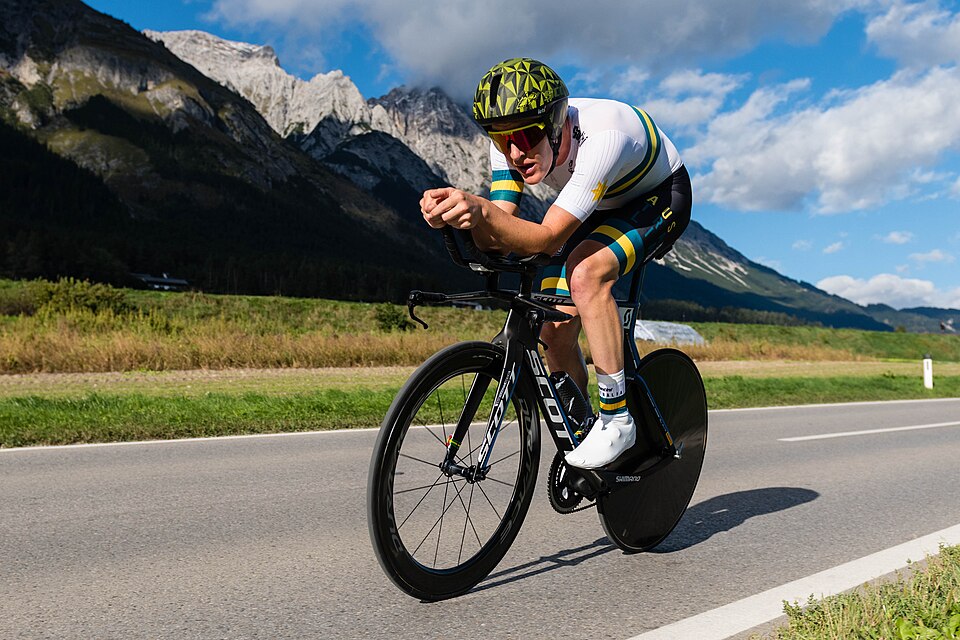
Johansson’s career achievements extend far beyond her Olympic medals, demonstrating her versatility as both a stage racer and one-day specialist. Her ability to win major stage races while also excelling in single-day events showcases her all-around capabilities as a cyclist. Throughout her career, she won a total of 61 professional races, making her one of the most successful Swedish cyclists of all time.
World Number One Ranking in 2013
The pinnacle of Johansson’s career came in 2013 when she reached the top position on the UCI Women’s World Ranking. This achievement recognized her consistent excellence across multiple race formats and seasons. Being ranked number one in the world is the highest individual honor in professional cycling, and Johansson earned this distinction through years of strong performances. The UCI Women’s World Ranking system considers results from all major races throughout the season, making this achievement particularly significant.
Her world number one ranking came during a period when she was also winning major stage races, including the Thüringen Rundfahrt der Frauen and Emakumeen Euskal Bira. This combination of consistent high-level performance and stage race victories demonstrated her complete skill set as a cyclist. Riders aiming to reach similar heights can benefit from cycling training plans for every goal and fitness level to structure their development. The ranking system weighted her results from World Championships, World Cups, and major tours, reflecting her versatility across different racing formats.
Key Race Victories: Thüringen Rundfahrt and Emakumeen Euskal Bira
Johansson’s stage racing credentials are impressive, with multiple victories in some of the most prestigious women’s stage races. She won the Thüringen Rundfahrt der Frauen three times (2011, 2013, 2015), a race known for its challenging terrain and strong international field. Understanding the equipment that top riders use can provide insights into performance, which is why 2024 road bike reviews of top models are valuable for serious cyclists. The Thüringen Rundfahrt is a 5-day stage race in Germany that features both flat stages and mountain finishes, requiring riders to be versatile and tactically astute.
She also claimed victory in the Emakumeen Euskal Bira twice (2013, 2016), another major stage race that tests riders’ climbing abilities and overall endurance. These victories demonstrate her ability to perform consistently over multiple days of racing, not just in one-day events where she was already known for her podium finishes. Proper nutrition plays a crucial role in sustaining performance across multi-day events, making complete cycling nutrition guides essential reading for stage racers. The Emakumeen Euskal Bira is a 5-day race in the Basque Country of Spain, featuring some of the most challenging climbs in women’s cycling.
Belgium Tour Victory and Other Notable Wins
In 2015, Johansson added another major victory to her palmarès by winning the Belgium Tour, one of the most important stage races on the women’s calendar. This victory completed her set of wins in the three major European stage races for women, showcasing her versatility and ability to win across different racing conditions. The Belgium Tour is a 4-day race that combines flat stages with challenging climbs, requiring riders to be strong in both sprinting and climbing.
Throughout her career, she also claimed victories in one-day classics and other significant races, building a record that includes wins in events like the Trofeo Alfredo Binda and Flèche Wallonne. These victories, combined with her numerous second and third-place finishes, created the consistent pattern that earned her both “Silver Emma” and “Miss Consistency” nicknames. Her ability to win across different types of races – from one-day classics to multi-day tours – demonstrates the complete skill set that made her one of the most respected riders in women’s cycling.
Team History and Professional Career
Johansson’s professional career spanned eleven years, during which she raced for several top teams in women’s cycling. Her team changes often coincided with career milestones and reflected her growing status in the sport. Each team provided different strengths and support systems that helped her develop as a rider and achieve her major victories.
Professional Teams and Career Timeline (2005-2016)
Johansson turned professional in 2005 with Bizkaia–Panda Software–Durango, a Spanish team that provided her early professional experience. She then moved to Red Sun, another Spanish team, before joining Hitec Products in 2010, where she began establishing herself as a consistent podium finisher. Her early years with Spanish teams helped her develop her racing skills in the competitive European peloton.
Her career reached new heights when she joined Orica–AIS in 2013, the same year she achieved her world number one ranking. This Australian team provided strong support for her stage racing ambitions and helped her secure multiple victories in major tours. The team’s structure and resources allowed her to focus on her strengths while developing new capabilities as a stage racer.
Johansson finished her career with Wiggle High5 (later known as Canyon-SRAM), one of the top teams in women’s cycling. She retired in 2016 after the Rio Olympics, ending an eleven-year professional career that saw her compete at the highest level across multiple racing disciplines. Her final team provided the support she needed to compete for Olympic medals and maintain her status as one of the world’s top riders.
Retirement and Legacy in Women’s Cycling
Johansson retired from professional cycling in 2016 at the age of 33, following her second Olympic silver medal. Her retirement came at the peak of her career, having just demonstrated her ability to compete for medals at the highest level eight years after her first Olympic success. The decision to retire after achieving her second Olympic medal was a fitting end to a career defined by consistent excellence in the biggest races.
Her legacy in women’s cycling extends beyond her race results. As one of Sweden’s most successful cyclists, she helped raise the profile of women’s road racing in her home country and inspired a new generation of female cyclists. Her consistency and professionalism set a standard for aspiring professionals, showing that sustained excellence over many years is possible in a sport often dominated by younger riders. The “Silver Emma” nickname, while originating from her Olympic results, came to represent something more significant – the ability to perform at one’s best when it matters most, even if victory sometimes eluded her.
Johansson’s impact on Swedish cycling cannot be overstated. She became a role model for young Swedish athletes and helped increase media coverage and public interest in women’s cycling. Her success demonstrated that Swedish cyclists could compete at the highest levels of the sport, inspiring others to pursue professional careers. Today, she remains involved in cycling through coaching and commentary, continuing to contribute to the sport that defined her professional life.
Emma Johansson’s Training and Racing Philosophy
Throughout her career, Johansson was known for her meticulous approach to training and preparation. She believed in the importance of consistency in training, often saying that success comes from showing up day after day and putting in the work, even when motivation is low. Her training philosophy emphasized building a strong aerobic base during the off-season, then gradually increasing intensity as races approached.
Johansson was also known for her tactical intelligence on the bike. She studied race profiles and understood how different courses suited different riders, allowing her to position herself optimally during key moments. Her ability to read races and make smart decisions contributed significantly to her consistent podium finishes. She often worked as a domestique for her team leaders early in her career, which gave her valuable experience in understanding race dynamics and team tactics.
Nutrition played a crucial role in her performance strategy. She worked closely with nutritionists to develop fueling plans for both training and racing, understanding that proper nutrition could make the difference between winning and losing in long, grueling races. Her attention to detail extended to equipment choices, recovery protocols, and mental preparation, all of which contributed to her longevity in the sport.
Major Career Statistics and Achievements
Emma Johansson’s professional career was marked by impressive statistics that reflect her consistent excellence. She won a total of 61 professional races across her 11-year career, including 3 victories in the Thüringen Rundfahrt der Frauen, 2 wins in the Emakumeen Euskal Bira, and 1 victory in the Belgium Tour. Her Olympic achievements include 2 silver medals (2008 Beijing, 2016 Rio), and she earned 1 silver and 2 bronze medals at the UCI Road World Championships.
Beyond her victories, Johansson achieved over 200 top-ten finishes in major races throughout her career. She spent a total of 39 weeks ranked as the world number one cyclist according to the UCI Women’s World Ranking system. Her consistency was remarkable – she finished in the top five in World Championships or Olympic Games in four different years (2009, 2010, 2015, 2016), demonstrating her ability to perform at the highest level across an entire decade.
Johansson also contributed to team success, helping her squads win numerous team classifications and supporting teammates to individual victories. Her experience and leadership made her a valuable asset to every team she joined, and her professionalism set an example for younger riders in the peloton. These statistics only tell part of her story – her true impact lies in how she elevated the standard of consistency and professionalism in women’s professional cycling.
Comparison with Contemporary Cyclists
Emma Johansson’s career coincided with the rise of several other dominant female cyclists, creating a competitive era in women’s road racing. When compared to her contemporaries, Johansson’s consistency stands out as her defining characteristic. While riders like Marianne Vos and Anna van der Breggen may have won more races in certain periods, Johansson’s ability to finish on the podium in major events year after year was exceptional.
Her head-to-head records against top competitors show her competitive nature. Against Marianne Vos, one of the most successful female cyclists of all time, Johansson won several major races and consistently finished on the podium when Vos was victorious. Her Olympic silver medals came against fields that included many of the greatest riders of her generation, demonstrating her ability to perform at her best when it mattered most.
What sets Johansson apart from many of her contemporaries is her longevity at the top level. While many riders experience peaks and valleys in their careers, Johansson maintained world-class form for over a decade. This consistency, combined with her ability to win different types of races and her success across various racing formats, makes her career unique among her generation of cyclists.
Impact on Swedish Sports and Cycling Development
Emma Johansson’s success had a significant impact on Swedish sports and the development of cycling in Sweden. Before her rise to prominence, cycling was not among the most popular sports in Sweden, which traditionally favored winter sports, handball, and football. Johansson’s international success helped change this perception and inspired a new generation of Swedish cyclists.
Her achievements led to increased media coverage of women’s cycling in Sweden and helped secure better support and funding for the sport. Swedish Cycling Federation reported increased participation in women’s cycling programs following her Olympic successes, with junior development programs seeing particularly strong growth. Johansson became a national sports icon, appearing in advertising campaigns and media features that raised the profile of cycling throughout the country.
The infrastructure for women’s cycling in Sweden also improved during her career, with more races being organized and better training facilities becoming available. Her success demonstrated that Swedish athletes could compete at the highest international levels, encouraging sports organizations to invest more resources in developing cycling talent. Today, Sweden has a stronger presence in international cycling than ever before, with several professional teams and a growing base of competitive cyclists at all levels.
Life After Professional Cycling
Since retiring from professional racing in 2016, Emma Johansson has remained involved in cycling through various roles. She has worked as a coach, helping develop young talent and sharing the knowledge gained from her extensive professional experience. Her coaching focuses on helping riders develop not just their physical capabilities but also their tactical understanding and mental preparation for competition.
Johansson has also become a respected commentator and analyst for cycling events, providing expert insights during broadcasts of major races. Her deep understanding of race tactics and her ability to explain complex racing situations in accessible terms have made her a valuable voice in cycling media. She regularly appears on Swedish sports channels and international broadcasts, bringing her expertise to a wider audience.
Beyond her direct involvement in cycling, Johansson has become an advocate for women’s sports and gender equality in athletics. She speaks at conferences and events about her experiences as a professional athlete and the challenges faced by women in sports. Her post-racing career demonstrates how successful athletes can continue to contribute to their sports and inspire others long after their competitive days are over.
Emma Johansson’s Influence on Modern Cycling
Emma Johansson’s influence on modern cycling extends beyond her race results and into how the sport approaches consistency and professionalism. Her career demonstrated that sustained excellence over many years is possible in a sport that often emphasizes dramatic peaks and dramatic declines. This philosophy has influenced how many current riders approach their careers, with more emphasis on longevity and consistent performance rather than just focusing on occasional victories.
Her tactical approach to racing, particularly her ability to read races and position herself optimally, has become a model for aspiring cyclists. Many current professional riders cite Johansson as an influence on their racing style, particularly her calm demeanor in high-pressure situations and her ability to make smart decisions during critical moments in races. Her influence is evident in how younger riders approach one-day classics and stage races, with more emphasis on tactical intelligence alongside physical preparation.
Johansson also helped establish new standards for professionalism in women’s cycling. Her meticulous attention to detail in training, nutrition, equipment, and recovery set examples that have been adopted throughout the women’s peloton. The increased professionalism she helped establish has contributed to the overall growth and improvement of women’s cycling, with current riders benefiting from the foundations she and her contemporaries established during their careers.
Emma Johansson’s career demonstrates that consistent excellence across multiple seasons is more valuable than occasional victories. Her ability to finish on the podium in the biggest races, year after year, made her one of the most respected and successful cyclists of her generation. For aspiring riders looking to improve their own performance, these 25 essential cycling tips can help build the foundation for long-term success. Her legacy continues to inspire cyclists around the world, proving that dedication, consistency, and smart preparation can lead to remarkable achievements in professional sports.