Major Cycling Achievements That Define a Professional Career

Illustration: What Are the Major Types of Cycling Achievements?
Major cycling achievements that define professional careers

  • Grand Tours represent the ultimate test of endurance and strategy
  • Monuments are the most prestigious one-day classics with unique challenges
  • World Championships award the coveted rainbow jersey to elite champions
  • Olympic medals showcase versatility across multiple cycling disciplines
  • Career achievements combine multiple victories across different race types

Professional cycling achievements are the milestones that separate good riders from legends, with different types of accomplishments carrying varying levels of prestige and difficulty. From the grueling endurance tests of Grand Tours to the explosive power of one-day Classics and the pinnacle of Olympic glory, these accomplishments define a cyclist’s career and place in history. Understanding what it takes to build a professional cycling career requires examining the dedication, training, and strategic decisions that separate champions from contenders.

What Are the Major Types of Cycling Achievements?
Illustration: What Are the Major Types of Cycling Achievements?

How Achievements Build a Cyclist’s Legacy

Professional cycling is a sport where a rider’s legacy is built upon a series of remarkable achievements. Different achievement types contribute to a rider’s overall legacy in unique ways. Grand Tour victories demonstrate endurance and tactical brilliance over three weeks of racing. Monument wins showcase the ability to excel in the sport’s most challenging one-day events. World Championship titles prove a rider can perform at their absolute peak when it matters most. Olympic medals represent the ultimate test of versatility across multiple cycling disciplines.

The most celebrated cyclists in history have combined achievements across these categories, creating a complete picture of cycling greatness. For example, Emma Johansson‘s career combined two Olympic silver medals (2008, 2016) with three World Championship medals and multiple classic victories, earning her the world number one ranking in 2013. Swedish cyclists like Johansson have made their mark on the world stage, demonstrating that excellence in cycling transcends national boundaries.

The Prestige Hierarchy in Professional Cycling

Cycling achievements can be ranked by prestige and difficulty:

  • Grand Tours: Tour de France, Giro d’Italia, Vuelta a España – winning the general classification is the ultimate career achievement
  • Monuments: Milan-San Remo, Tour of Flanders, Paris-Roubaix, Liège-Bastogne-Liège, Il Lombardia – the five most prestigious one-day races
  • World Championships: Road race and individual time trial titles with the rainbow jersey
  • Olympic Medals: Gold, silver, or bronze in road race or track events
  • Classic Races: One-day events like Omloop Het Nieuwsblad and Trofeo Alfredo Binda
  • Stage Racing: Multi-day stage races like the Belgium Tour and Thüringen Rundfahrt

How Do Grand Tours Define a Cyclist’s Career?
Illustration: How Do Grand Tours Define a Cyclist's Career?

The Three Grand Tours and Their Unique Challenges

The Grand Tours – the Tour de France, Giro d’Italia, and Vuelta a España – represent the most prestigious stage races in professional cycling. Winning the general classification (GC) of any one of these is a career-defining feat.

Tour de France: The most famous and arguably the most challenging, often considered the ultimate prize in cycling. This three-week race through France tests every aspect of a rider’s abilities, from time trialing to mountain climbing.

Giro d’Italia: Known for its demanding mountain stages and rich history, often seen as a test of pure grit. The Italian race features some of cycling’s most iconic climbs and unpredictable weather conditions.

Vuelta a España: Typically the final Grand Tour of the season, characterized by its unpredictable nature and challenging climbs. The Spanish race often features aggressive racing and dramatic finishes.

Eddy Merckx’s Unparalleled Grand Tour Record

Eddy Merckx holds an unparalleled record with eleven Grand Tour victories, including five Tour de France wins and five Giro d’Italia wins. This achievement, documented in People Also Ask research, represents the pinnacle of Grand Tour success. Merckx’s dominance across multiple Grand Tours demonstrates the rare combination of consistency, versatility, and sheer determination required to achieve this level of success. His record has stood for decades, highlighting just how difficult it is to win even a single Grand Tour, let alone multiple victories across different races.

What Makes the Monuments and World Championships Special?

The Five Monuments: Cycling’s Most Prestigious One-Day Races

The Monuments are the five oldest, most prestigious, and most challenging one-day races in the cycling calendar. Winning even one is a significant achievement, and multiple victories cement a rider’s status as a legend.

Milan-San Remo: The first Monument of the season, often decided by a sprint or a late attack. This 300-kilometer race along Italy’s Mediterranean coast is known as the “Sprinters’ Classic” but often rewards tactical brilliance.

Tour of Flanders (Ronde van Vlaanderen): Famous for its short, steep climbs (hellingen) and cobbled sections. This Belgian race tests riders’ ability to handle technical terrain and maintain power on repeated short climbs.

Paris-Roubaix: Known as the “Hell of the North,” this race is notorious for its brutal cobbled sectors. The race’s unique challenges have made it one of cycling’s most coveted victories.

Liège-Bastogne-Liège: The oldest of the Monuments, a grueling race through the Ardennes hills. This race favors climbers who can handle repeated ascents over its 260-kilometer distance.

Il Lombardia (Giro di Lombardia): The final Monument, often a climber’s race held in the autumn. Known as the “Race of the Falling Leaves,” it features challenging climbs around Lake Como.

World Championships and the Rainbow Jersey

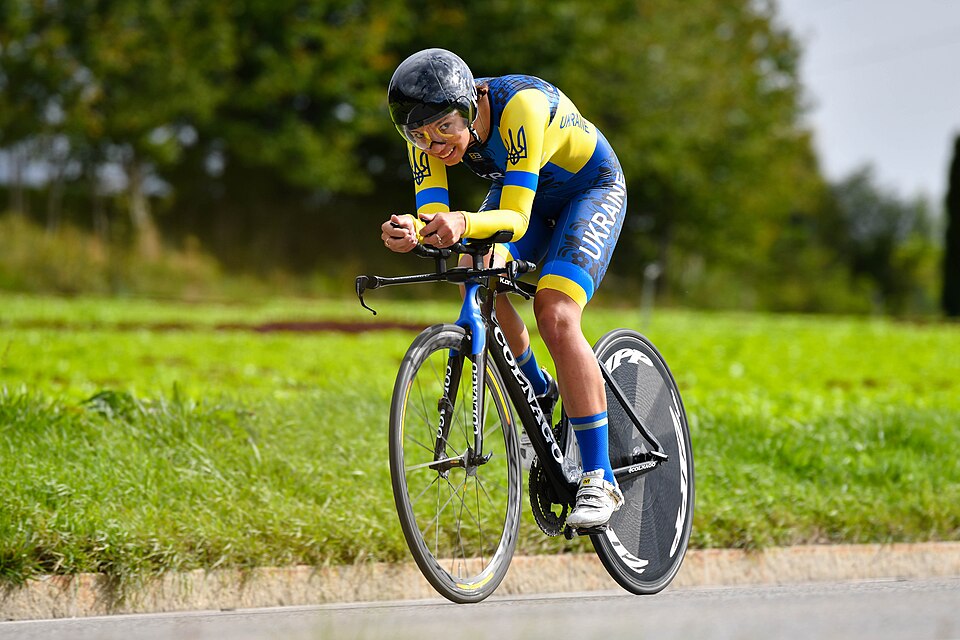
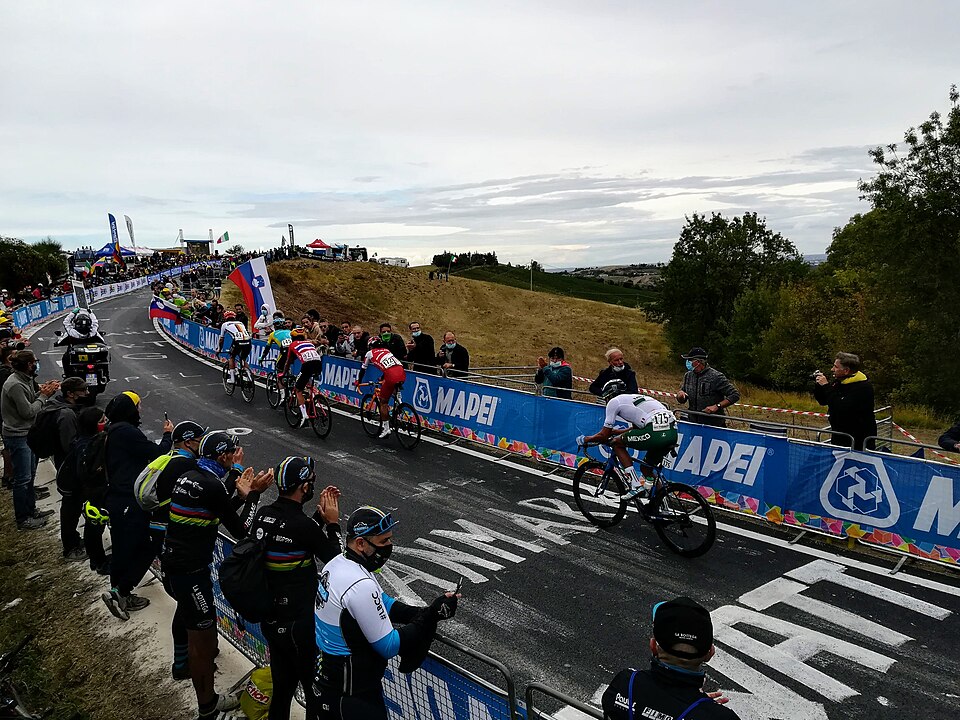
The UCI Road World Championships award the coveted “rainbow jersey” to the winners of various disciplines, signifying the rider as the world champion for the following year. The road race title is considered the elite crown for the best single-day road racer, often a tactical battle where timing and strategy are crucial.

The individual time trial (ITT) discipline tests pure speed and endurance against the clock, rewarding riders with exceptional power output and aerodynamic positioning. World champions in these disciplines wear the rainbow jersey for an entire year, making them instantly recognizable and carrying significant prestige. The Road Cycling World Championships represent the culmination of a season-long battle for supremacy across multiple disciplines.

Emma Johansson secured three World Championship medals during her career, demonstrating her ability to perform at the highest level on the world stage. The rainbow jersey represents the ultimate recognition of a rider’s abilities in their specific discipline.

The most successful cyclists often combine achievements across multiple categories. Eddy Merckx won all five Monuments, showcasing his versatility and dominance. Peter Sagan is a three-time consecutive winner of the World Championships road race. These combinations of achievements across different race types create the complete picture of cycling greatness that defines legendary careers.

Women’s road cycling has seen tremendous growth in recent years, with athletes like Emma Johansson paving the way for future generations. The achievements outlined in this article represent the pinnacle of what’s possible in professional cycling, whether competing in the Tour de France, winning a Monument, or earning an Olympic medal.
Understanding the UCI World Ranking System in Women’s Cycling

Illustration: How UCI World Ranking Points Are Earned in Women's Cycling

The UCI World Ranking system awards points based on finishing positions in UCI-sanctioned races over a 12-month period. The 2026 overhaul aligned women’s points with the men’s scale, with the Tour de France Femmes winner now earning 1,300 points. Rankings are calculated monthly for individuals, annually for teams (top 4 riders), and by summing top 5 riders for nations. Major races like the Olympics and World Championships offer 900 points to the winner, while Women’s Monuments offer 800 points. The system has been in place since 1994, with Emma Johansson achieving the #1 ranking in 2013.

Key Takeaway

  • UCI World Ranking awards points based on finishing positions in UCI-sanctioned races over 12 months

  • 2026 overhaul aligned women’s points with men’s scale, with Tour de France Femmes winner earning 1,300 points

  • Major races like Olympics and World Championships offer 900 points to the winner

  • Rankings calculated monthly for individuals, annually for teams (top 4 riders), and by summing top 5 riders for nations

How UCI World Ranking Points Are Earned in Women’s Cycling

Illustration: How UCI World Ranking Points Are Earned in Women's Cycling

The UCI World Ranking system evaluates individual riders, teams, and nations based on results in UCI-sanctioned races over a 12-month period. Points are awarded based on finishing positions, with major races like the Olympics and World Championships offering the most points. The system underwent a major overhaul in 2026, aligning women’s points with the men’s scale. Rankings are calculated monthly for individuals, annually for teams (top 4 riders), and by summing top 5 riders for nations. This comprehensive system determines a rider’s status in professional cycling and affects everything from team contracts to race invitations.

Point Values for Major Races in 2026

Race Category

Winner Points

Second Place

Third Place

Fourth Place

Fifth Place

Tour de France Femmes

1,300

900

700

600

500

Women’s Monuments

800

600

500

400

350

Grand Tours (Giro, Vuelta)

800

600

500

400

350

World Championships

900

700

600

500

450

Olympics

900

700

600

500

450

WorldTour stage races

500

400

300

250

200

ProSeries victories

250

200

150

120

100

How Points Are Calculated Based on Finishing Position

  • Points awarded based on finishing positions in UCI-sanctioned races over 12-month period

  • System evaluates riders based on their best results across different race categories

  • Major races offer most points, minor races fewer points to reflect importance

  • Stage races award points for both individual stages and overall classification

  • Daily leader jersey points awarded for wearing classification jerseys

  • Points can be lost through penalties (short-cuts, littering, missing press conferences)

  • Mixed relay time trial awards 300 points divided by 3 (100 each)

  • National championships split into A and B groups based on previous World Championship participation

  • Points accumulate differently for one-day races versus stage races

  • Time trial specialists earn points in specific events but may struggle in road races

  • Young riders can earn bonus points in U23 categories

  • Points from national team events count toward individual rankings

  • Top 30 finishers in major races receive points, with steep drops between positions

  • Points expire after 12 months, creating constant pressure to perform

  • Riders must defend their points each month as older results drop off

  • Team time trials award points to all team members who finish together

  • Points for stage races are weighted more heavily for overall classification than individual stages

  • Bonus seconds in races can affect final positions and point earnings

What UCI Rankings Mean for Professional Cyclists

Illustration: What UCI Rankings Mean for Professional Cyclists

UCI rankings determine a rider’s status in professional cycling, affecting team contracts, race invitations, and career opportunities. The ranking system creates a clear hierarchy of achievement and provides objective criteria for team selection. Riders compete not just for race victories but for valuable points that build their standing in the sport. High rankings lead to better team contracts, automatic invitations to major races, and increased media attention. Lower-ranked riders must rely on wildcard invitations and struggle to secure sponsorship deals. The rankings also influence equipment contracts, appearance fees, and post-career opportunities in coaching and commentary.

Current Top Riders and Their Point Totals

  • Demi Vollering (NED) – 4845.57 points (current #1 ranked rider)

  • Marianne Vos – 278 weeks as world #1 (most of any rider)

  • Elisa Longo Borghini – consistently ranked in top 10 with 3200+ points

  • Lorena Wiebes – specializes in sprint points accumulation with 2800+ points

  • Marlen Reusser – strong time trial specialist with 2500+ points

  • Elisa Balsamo – former world champion with sustained ranking at 2400+ points

  • Katarzyna Niewiadoma – aggressive racing style earns consistent points at 2300+ points

  • Emma Johansson finished 2013 as world #1 ranked female road cyclist

  • Points gaps between top riders can exceed 1000 points, creating clear hierarchy

  • Riders ranked outside top 100 struggle to secure WorldTour contracts

  • Top 20 riders earn significantly more in appearance fees and bonuses

  • Points distribution shows steep drop-off after top 10 positions

  • Consistency over 12 months matters more than single race victories

  • Riders must balance targeting high-point races with maintaining consistent performance

  • Team support crucial for maximizing point earning potential

  • Young riders face pressure to establish themselves quickly in rankings

Team and National Rankings Explained

Team rankings are calculated annually based on the top 4 riders’ performances, with the UAE Team ADQ currently leading at 3416 points. National rankings sum the top 5 riders’ points, with the Netherlands dominating at 14196.14 points. These rankings affect team selection for major events, with top-ranked teams receiving automatic invitations to prestigious races. National rankings determine Olympic team selection and World Championship representation. The system creates competition not just between individuals but between teams and nations, adding another layer of strategy to professional cycling. Teams with higher rankings receive better starting positions in races and more favorable route choices in stage races. National federations use rankings to justify funding and support for their programs.

The 2026 UCI World Ranking Overhaul

The 2026 overhaul represented the most significant change to women’s cycling rankings since the system’s inception. This alignment with the men’s scale created mathematical equality but practical inequality due to calendar differences. The changes affected race strategies, team priorities, and rider career planning across the professional women’s peloton. The overhaul aimed to increase the sport’s visibility and provide clearer pathways for rider development. The changes also addressed long-standing concerns about the disparity between men’s and women’s racing opportunities and prize money — women’s road cycling.

Major Changes to Women’s Point Scale

  • 2026 overhaul aligned women’s points with men’s scale for mathematical equality

  • Tour de France Femmes winner now earns 1,300 points (previously lower)

  • Women’s Monuments point values increased to match men’s scale

  • Grand Tours point structure standardized across men’s and women’s racing

  • World Championships and Olympics both offer 900 points to winners

  • System has been in place since 1994 but underwent major revision in 2026

  • Point distribution now mirrors men’s calendar for comparable race categories

  • Stage race points increased to reflect longer race duration and difficulty

  • Time trial world championships point values adjusted for technical discipline

  • Points for national championships redistributed based on UCI nation ranking

  • Women’s WorldTour races now offer same points as comparable men’s events

  • Point scales for ProSeries events standardized across genders

  • Bonus points for stage victories in multi-day races increased

Impact on Women’s Professional Cycling

The new point system affects race strategies and rider priorities across the women’s peloton. Riders now focus on accumulating points across multiple race categories rather than specializing in single events. Teams prioritize riders who can consistently score points in various race types. The alignment creates more opportunities for comparison between men’s and women’s performances but also highlights the disparity in race calendar depth. Riders must now balance targeting high-point races with maintaining consistent performance throughout the season to protect their rankings. The changes have led to more strategic race planning, with teams targeting specific races for maximum point potential rather than just victory opportunities. The overhaul has also increased competition for spots on top teams, as consistent point scoring becomes crucial for contract renewals.

The most surprising finding is that despite the 2026 alignment creating mathematical equality in point values, the practical impact remains unequal due to the women’s calendar having fewer race days and opportunities. To maximize your understanding of professional cycling, study how riders strategically target specific races based on their strengths and the point values offered, then track their progress throughout the season to see how rankings evolve.

Vinnaren Av Silver Emmas Stipendium 2019

Vinnaren av Silver Emmas Stipendium 2019 är, med motiveringen…

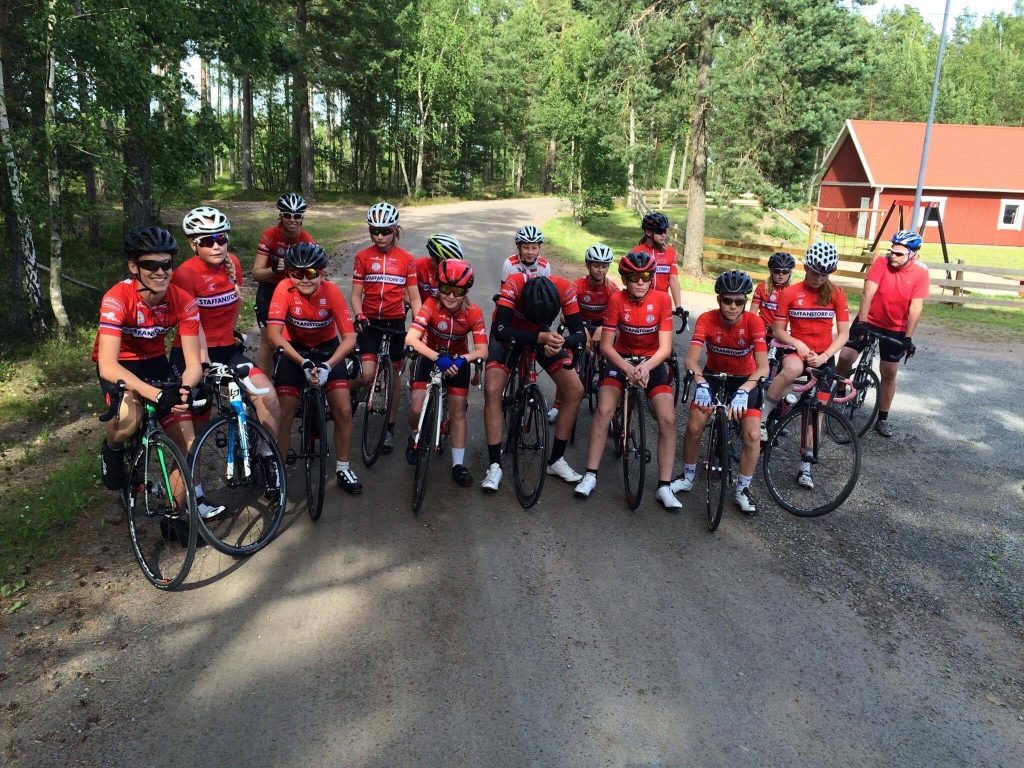
“En av Sveriges största klubbar på landsväg och numera också med en växande verksamhet på MTB.
Klubben är till för alla men ungdomar är den huvudsakliga inriktningen. Deras nyckel till fortsatt framgång är gemenskap och de har en tydlig plan på hur de ska få ungdomarna att växa och utveckla sig.”

Staffanstorps CK! Stort Grattis!

Stipendiet kommer att delas ut lördagen den 16 mars  kl. 13:00 på Stora Scenen av mig.
Kom och lyssna på vad vinnaren ska använda stipendiet till och vilken betydelse det har för dem.

Emma

Inspired By Being An Inspiration

Last week me and Martin got the opportunity to speak for the U23 National Team cross country skiing.
To stand in front of these future stars and tell them our story was special. I might come from a different sport but what I have experienced through my career; setting goals, my highs and lows are more or less what they will meet on their journey too.

Before leaving Bruksvallarna where they had their last camp before season starts, we got a round tour in the new wax bus. Pretty cool to see the professional set up and to hear about the hard work behind the scene.

There is no I in TEAM and every step is important.

Good Luck this season and thanks for having us,

Emma, Martin and Morris