Road bike geometry determines whether you’ll win a criterium or finish a century comfortably — the difference between 73° and 71° head tube angle can mean the difference between twitchy cornering and stable descending.
Road bike geometry affects every aspect of your ride
- Stack and reach determine your fit — low stack = aerodynamic, long reach = speed
- Head tube angle controls steering — steeper = quicker, slacker = more stable
- Wheelbase and chainstays balance stability and agility — short = responsive, long = comfortable
- Race geometry prioritizes speed; endurance geometry prioritizes comfort
- Modern frames with wider tire clearance improve comfort without sacrificing performance
Stack and Reach: The Foundation of Your Riding Position
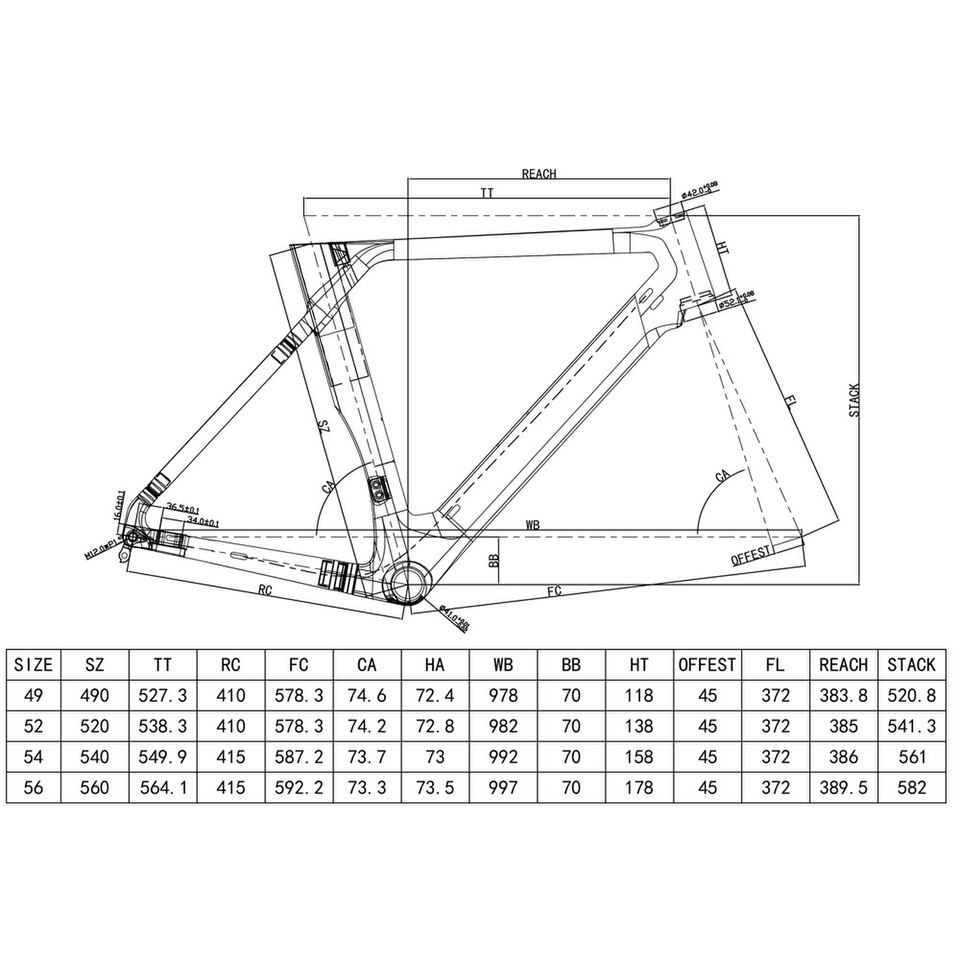
Stack and reach are the most important measurements for sizing and fit. These two dimensions determine your body position on the bike and directly impact both comfort and performance. Understanding how they work together is essential for choosing the right bike for your riding style.
Stack Height: How Vertical Position Affects Aerodynamics and Comfort
Stack is the vertical distance from the bottom bracket to the top of the head tube. A low stack means a lower, more aerodynamic (aggressive) position. According to Canyon’s geometry research, reducing stack by just 10mm can decrease wind drag by 1.5–2%, making a significant difference in racing scenarios. However, this aggressive position comes at a cost — lower stack places more strain on your back and neck, making it less suitable for long-distance endurance rides where comfort becomes paramount.
Race-oriented road bikes typically feature stack heights ranging from 500-550mm for size medium frames, while endurance bikes extend to 550-600mm for the same size. This 50mm difference translates to a dramatically different riding experience. Professional time trialists often use stack heights as low as 480mm to maximize aerodynamic efficiency, but this position requires exceptional core strength and flexibility. For recreational riders, a stack height that allows a 45-degree torso angle typically provides the best balance between aerodynamics and comfort.
The relationship between stack and handlebar height is equally important. A bike with low stack but high-rise handlebars can feel more comfortable than a bike with moderate stack and flat handlebars. This is why many endurance bikes feature taller head tubes that accommodate more spacers and angled stems, allowing riders to fine-tune their position without changing the frame’s fundamental geometry.
Reach Length: Horizontal Stretch and Power Transfer
Reach is the horizontal distance from the bottom bracket to the top of the head tube. A longer reach stretches the rider out, increasing speed potential but reducing comfort. The extended position allows for better power transfer and a more aerodynamic profile, which is why race bikes feature longer reaches. In contrast, endurance bikes use shorter reaches to create a more upright, comfortable posture that reduces strain during long rides. The trade-off is clear: aggressive reach maximizes speed but can lead to back fatigue on rides over 50 miles.
Typical reach measurements for size medium road bikes range from 385-395mm for race geometry and 375-385mm for endurance geometry. This 10-15mm difference significantly impacts how the bike feels and performs. Longer reach positions the rider’s weight further forward, improving front-wheel traction during climbing and creating a more aggressive cornering stance. However, it also increases strain on the lower back and hamstrings, particularly during sustained efforts.
Modern bike fitting emphasizes the importance of matching reach to your body proportions. Riders with longer torsos often benefit from bikes with extended reach, while those with shorter torsos may find standard race geometry uncomfortable. The key is finding a position where you can maintain power output while staying relaxed enough to ride for hours. Many professional bike fitters use the “knee over pedal spindle” (KOPS) method as a starting point, then adjust reach based on the rider’s flexibility and riding goals.
Head Tube Angle: Steering Responsiveness and Handling
Head tube angle (HTA) defines steering responsiveness and dramatically affects how a bike handles different riding conditions. This critical measurement, typically ranging from 71° to 74.5°, determines whether your bike feels like a nimble race machine or a stable endurance platform.
Steeper Head Tube Angles (73°–74.5°): Quick Handling for Racing
Steeper head tube angles, ranging from 73° to 74.5°, create quicker, twitchier handling that’s ideal for criteriums and agile cornering. This geometry makes the bike feel more responsive and nimble, allowing for rapid direction changes and precise line selection through tight turns. Race bikes use these steeper angles because they provide the sharp handling needed in competitive scenarios where every fraction of a second counts. The trade-off is that steeper angles can feel less stable at high speeds, especially on technical descents.
The steering dynamics of steeper angles become particularly evident in criterium racing, where courses feature tight 180-degree turns and frequent accelerations. Bikes with 73.5° or 74° head angles can change direction almost instantly, allowing riders to maintain momentum through corners and position themselves strategically in the peloton. However, this responsiveness requires constant attention from the rider — the bike wants to turn with minimal input, which can be fatiguing over long distances.
Professional racers often prefer head angles between 73.5° and 74° for road racing, while time trial specialists might use angles as steep as 74.5° to maximize responsiveness in the aero position. The steeper the angle, the more the front wheel wants to turn with minimal handlebar input, creating that characteristic “twitchy” feel that experienced racers learn to control instinctively. For amateur racers, this level of responsiveness can be both exciting and challenging, requiring practice to master.
Slacker Head Tube Angles (71°–72°): Stable Descending and High-Speed Confidence
Slacker head tube angles, ranging from 71° to 72°, create slower, more stable handling that provides confidence at high speeds and on descending. This geometry makes the bike feel planted and predictable, which is crucial when navigating fast descents or riding in windy conditions. Endurance bikes and touring bikes favor slacker angles because they prioritize stability over quick handling. The more relaxed steering response means you sacrifice some agility in tight corners, but gain confidence when the road points downhill or becomes technical.
The stability benefits of slacker angles become most apparent during high-speed descents and in crosswinds. A bike with a 71.5° head angle will track straighter through gusty conditions and feel more composed when descending at 50+ mph. This stability comes from the longer trail measurement that slacker angles create — the distance between where the steering axis intersects the ground and where the front tire contacts the road. More trail equals more self-centering force, making the bike feel like it wants to go straight.
Many endurance bike manufacturers have settled on head angles between 72° and 72.5° as the sweet spot for all-day comfort and confidence. This range provides enough stability for comfortable descending while maintaining reasonable responsiveness for cornering. The geometry also works well with wider tires, which have become increasingly popular for endurance riding. The combination of slacker angles and wider tires creates a bike that feels planted on rough roads while still being capable of spirited riding when desired.
Wheelbase and Chainstay Length: Stability vs. Agility
Wheelbase and chainstay length work together to determine whether your bike feels like a nimble race machine or a stable endurance platform. These measurements, often overlooked by casual riders, significantly impact how a bike accelerates, corners, and handles rough pavement.
Wheelbase Length: The Foundation of Bike Stability
- Wheelbase is the distance between the front and rear hubs. Short wheelbase creates snappy, responsive, and easy-to-accelerate handling that’s perfect for racing and criteriums. The compact feel makes the bike feel lively and eager to change direction. Long wheelbase creates stable, comfortable, and predictable handling that’s ideal for long endurance rides. The extended platform provides a smoother ride over rough pavement and more predictable behavior in crosswinds. Most race bikes feature wheelbases around 970-990mm, while endurance bikes extend to 1000-1020mm for added stability.
The wheelbase measurement affects every aspect of bike handling, from cornering to climbing to descending. A shorter wheelbase makes the bike feel more agile and responsive, allowing for quicker direction changes and more precise line selection through technical sections. However, this agility comes at the cost of stability — shorter wheelbases can feel nervous at high speeds and less predictable in crosswinds.
Race bikes typically feature wheelbases between 970-990mm for size medium frames, with the exact measurement depending on the intended use. Aero race bikes might be slightly longer to accommodate aerodynamic tube shapes, while climbing bikes are often shorter to maximize agility. Endurance bikes extend to 1000-1020mm, with the additional length providing a more relaxed, stable feel that’s particularly beneficial for long rides on rough roads. The 30-50mm difference in wheelbase between race and endurance bikes represents a significant change in how the bike handles and feels.
Modern wheelbase design also considers tire clearance and aerodynamics. Wider tires require more space between the chainstays and seatstays, which can increase wheelbase length. However, many manufacturers have found ways to maintain race-proven handling characteristics while accommodating wider tires through careful tube shaping and carbon layup optimization. The result is bikes that offer the comfort of wider tires without the stability penalty traditionally associated with longer wheelbases.
Chainstay Length: Rear-End Dynamics and Tire Clearance
- Chainstay length affects rear-end stability and acceleration characteristics. Short chainstays keep the bike agile and provide snappy power transfer, making the bike feel responsive under acceleration and quick in tight situations. Long chainstays enhance stability and often accommodate wider, more comfortable tires. Modern road bikes increasingly feature chainstay lengths that allow for 28mm+ tire clearance, a trend that improves comfort without sacrificing performance. The additional tire volume allows for lower pressures, which smooths out road vibrations while maintaining low rolling resistance on rough surfaces.
Chainstay length, typically ranging from 405-415mm for race bikes and 410-420mm for endurance bikes, significantly impacts how a bike accelerates and handles. Shorter chainstays create a more responsive rear end that feels quick under acceleration and agile in tight situations. The rear wheel is positioned closer to the bottom bracket, which reduces the lever arm during pedaling and creates a more direct power transfer sensation. This responsiveness is particularly noticeable during standing starts and accelerations out of corners.
Longer chainstays provide several benefits that endurance riders appreciate. The extended rear triangle creates a more stable platform that’s less affected by rider weight shifts and road irregularities. This stability is especially valuable when riding no-handed or carrying light loads. Additionally, longer chainstays provide more tire clearance, allowing for wider tires that improve comfort and traction. Many modern endurance bikes feature chainstays around 415-420mm to accommodate 28-32mm tires while maintaining reasonable handling characteristics.
The trend toward wider tire clearance has influenced chainstay design significantly. Manufacturers must balance the desire for tire clearance with the need for responsive handling. Some brands have solved this by using dropped chainstays that curve out of the way of the rear tire, allowing for 30mm+ tire clearance without dramatically increasing chainstay length. Others have adopted asymmetric chainstay designs that provide clearance on one side while maintaining a compact profile on the drive side. These innovations mean riders can enjoy the comfort benefits of wider tires without sacrificing the handling characteristics they expect from a performance road bike.
The geometry that wins races isn’t the same geometry that wins centuries — understanding this difference is what separates weekend warriors from informed riders. Before your next bike purchase, measure your current stack and reach, then compare them to the geometry specs of bikes you’re considering. That 5mm difference in reach could be the difference between loving your ride and dreading your next century. For those new to the sport, a beginner cycling training plan can help you build the fitness needed to fully enjoy your new bike.
For more information about road cycling techniques and bike selection, visit our comprehensive guide on . You might also be interested in our to help you make the best choice for your riding style.