The 2008 Beijing Olympic women’s road race was a 126.4 km battle through heavy rain that ended with a dramatic five-woman sprint finish, where Emma Johansson claimed silver and earned her “Silver Emma” nickname.
2008 Beijing Olympic Road Race: The Race That Created “Silver Emma”
- August 10, 2008: 126.4 km race in heavy rain on Beijing’s Urban Road Cycling Course
- Five-woman breakaway with 13 km remaining: Johansson, Cooke, Guderzo, Soeder, Villumsen
- Final 200-metre sprint decided gold (Cooke) and silver (Johansson) with identical 3:32:24 finish times
- This performance established Johansson as Sweden’s top cyclist and earned her 2008 Swedish Sportsperson of the Year
The 2008 Beijing Olympic Women’s Road Race: Race Details and Results
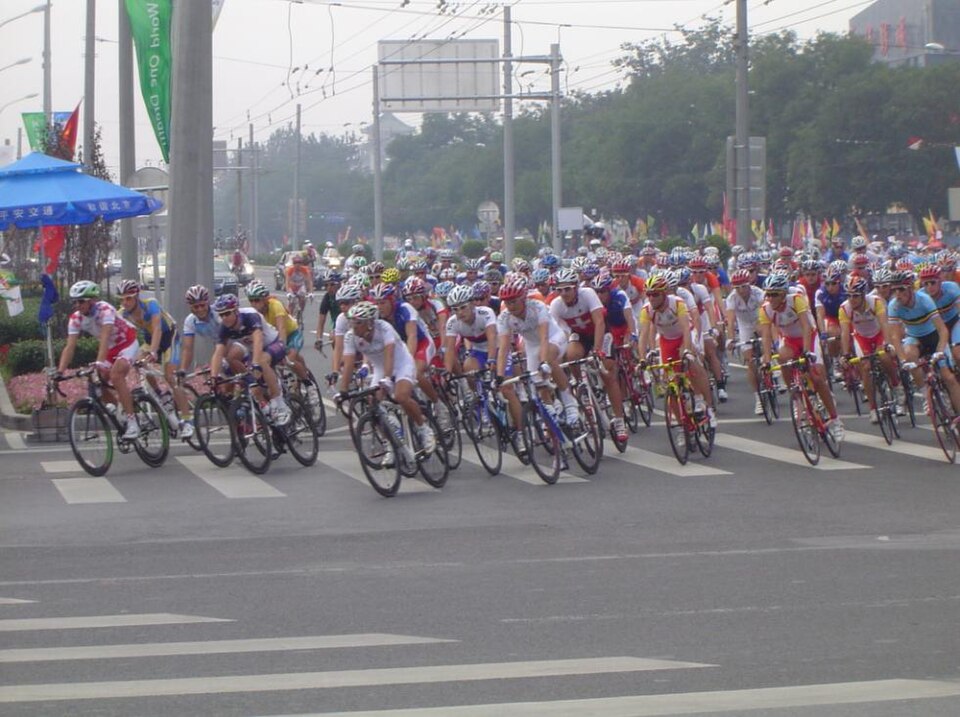
Race Conditions and Course Details: The 126.4 km Battle in Heavy Rain
The women’s road race at the 2008 Beijing Olympics took place on August 10, 2008, under challenging weather conditions. The 126.4 km race was held on the Urban Road Cycling Course, where heavy rain made the roads slippery and visibility poor. These conditions tested the endurance and technical skills of all 66 competitors from 36 nations. The course featured multiple climbs and technical descents that became even more treacherous in the wet conditions, setting the stage for a race where strategy and timing would be crucial.
The Urban Road Cycling Course in Beijing was designed to showcase both the city’s modern infrastructure and its surrounding countryside. The route included several categorized climbs that would typically favor climbers, but the heavy rain neutralized some of these advantages by making descents particularly dangerous. Riders had to balance the need for speed with the risk of crashing on wet roads, creating a tactical battle where positioning and bike handling skills were as important as pure power.
The weather conditions on race day were particularly severe, with persistent rainfall throughout the 126.4 km distance. This created a scenario where the traditional favorites had to adapt their strategies, as the rain favored riders with strong bike-handling skills and tactical awareness. The conditions also meant that any breakaways would have to work exceptionally hard to maintain their advantage, as the chasing peloton could draft more effectively in the wet conditions where everyone was forced to ride more conservatively.
The Final Results: Who Finished and Their Times
The top finishers in the 2008 Olympic women’s road race were:
- Nicole Cooke (Great Britain) – Gold medal, 3:32:24
- Emma Johansson (Sweden) – Silver medal, 3:32:24
- Tatiana Guderzo (Italy) – Bronze medal, 3:32:24
- Christiane Soeder (Austria) – 4th place, 3:32:24
- Linda Villumsen (Denmark) – 5th place, 3:32:24
All five riders finished with the same time of 3:32:24, separated only by their positioning in the final sprint — women’s road cycling.
The fact that all five breakaway riders finished with identical times of 3:32:24 demonstrates the exceptional nature of this race. In Olympic road racing, it’s rare for such a large group to maintain a cohesive breakaway all the way to the finish line, especially under challenging weather conditions. This result highlighted the tactical sophistication of the riders involved and the effectiveness of their cooperation in the final kilometers.
The identical finishing times also meant that the medals were decided purely on positioning rather than time gaps, adding an extra layer of drama to the final sprint. This situation is relatively uncommon in road racing, where time differences of seconds or even fractions of a second often separate the top finishers. The 2008 race showed how a perfectly executed breakaway could neutralize the traditional time-trial aspects of road racing, making the final sprint the sole determinant of medal positions.
The Five-Woman Breakaway: How the Race Was Decided
The decisive moment came with 13 kilometers remaining when Tatiana Guderzo launched a decisive attack that created a five-woman breakaway group. This move brought together the eventual medal winners along with Christiane Soeder and Linda Villumsen. The breakaway worked together efficiently, maintaining their advantage over the chasing peloton. This strategic move demonstrated the importance of timing and teamwork in Olympic road racing, as the five riders who made this decisive move would determine the final podium positions.
Guderzo’s attack with 13 km to go was a calculated risk that paid off spectacularly. At that point in the race, the peloton was tired from battling the rain and the course’s challenging terrain, making it the perfect moment for a strong rider to test the waters. The fact that four other riders immediately responded to her move shows how well-read the race situation was by the top contenders. They recognized that this was likely their best chance to avoid a bunch sprint finish, where sprinters might have an advantage.
The cooperation within the breakaway group was remarkable, especially considering that four of the five riders would ultimately be disappointed with anything less than gold. In professional racing, breakaways often fail because riders are unwilling to work together when they know only one can win. However, the Olympic context and the challenging conditions created a situation where all five riders understood that their best chance was to work together to maintain their advantage, then decide the medals in a final sprint.
The Dramatic Finish: How Nicole Cooke Won Gold and Emma Johansson Took Silver
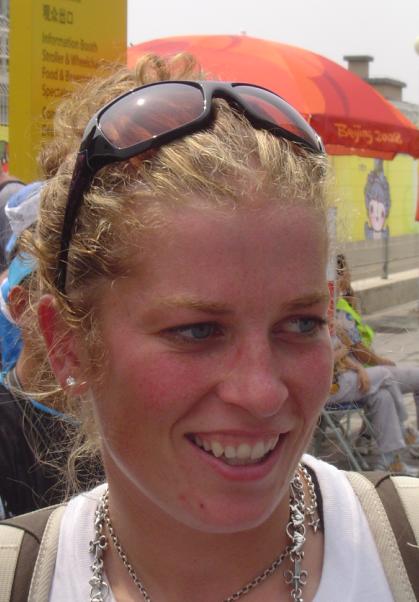
The Final 200 Metres: The Sprint That Decided Gold and Silver
The race came down to a final 200-metre sprint on the finishing straight, where Nicole Cooke launched her decisive move to claim gold. Cooke’s superior sprinting ability allowed her to edge out Emma Johansson in the final meters, despite both riders having identical finishing times of 3:32:24. The photo finish clearly showed Cooke crossing the line first, with Johansson just behind her. This dramatic conclusion highlighted the fine margins that separate Olympic gold from silver in road cycling.
The final 200 metres of the 2008 Olympic road race encapsulated everything that makes road cycling such a compelling sport. After 126.4 km of racing through rain, over climbs, and through technical descents, the medals were decided in a flat-out sprint over a distance that professional sprinters cover in about 12-15 seconds. This dramatic conclusion showed how road racing combines endurance, tactics, and explosive power, with the final sprint being the ultimate test of a rider’s top-end speed.
Cooke’s victory in the final sprint was a testament to her versatility as a rider. While she wasn’t known primarily as a sprinter, her ability to produce a strong finishing effort after a long, hard race demonstrated the all-around capabilities needed to succeed in one-day classics and stage races. Johansson, despite being edged out for gold, showed her own sprinting prowess by beating Guderzo for silver, proving that she was among the fastest finishers in the world despite not being a pure sprinter.
The Medal Ceremony: Three Riders, One Time, Different Medals
The medal ceremony for the 2008 women’s road race was unusual in that Cooke, Johansson, and Guderzo all finished with exactly the same time of 3:32:24. However, the medals were awarded based on their finishing positions in the final sprint. This situation demonstrated how Olympic road racing combines both time trial elements with traditional road racing tactics. The three riders stood together on the podium, separated by mere centimeters in the final sprint but divided by different colored medals.
This unique situation where three riders shared the same finishing time but received different medals created an interesting dynamic for the medal ceremony. While Cooke celebrated her gold medal victory, Johansson and Guderzo had to accept that their identical performances were distinguished only by the order in which they crossed the line. This outcome highlighted the sometimes arbitrary nature of sprint finishes in determining medal positions, especially when riders have demonstrated equal strength throughout the entire race.
The shared finishing time also meant that the bronze medal was decided in the same final sprint that determined gold and silver. Guderzo’s third-place finish over Soeder and Villumsen in the breakaway showed how the medals effectively went to the three best sprinters among the five-rider group. This outcome demonstrated that in road racing, being the fastest sprinter can be just as important as being the strongest climber or time trialist, especially in races that come down to a group finish.
The Other Breakaway Contenders: Soeder and Villumsen’s Roles
Christiane Soeder and Linda Villumsen played crucial roles in the decisive breakaway, contributing to the pace-setting that helped maintain their advantage over the peloton. While they didn’t medal, their participation in the final group demonstrated the unpredictable nature of Olympic road racing, where breakaways can succeed against the odds. Both riders finished just seconds behind the medalists, showing how close the competition was among the top contenders.
Soeder and Villumsen’s contributions to the breakaway were essential to its success. In breakaways, riders must take turns at the front to share the workload, and these two riders likely did their fair share of pace-setting to keep the group away from the chasing peloton. Their selfless riding, despite knowing they were unlikely to medal if the breakaway stayed away, showed the professional dedication required at the highest level of the sport. This kind of teamwork, even among potential rivals, is what makes successful breakaways possible in road racing.
The fact that Soeder and Villumsen finished just outside the medals also highlights how narrow the margins are at the Olympic level. In many sports, finishing fourth or fifth might represent a significant gap to the podium, but in this race, all five breakaway riders finished within seconds of each other. This closeness of competition demonstrates the exceptional depth of talent in women’s road cycling and how small differences in sprinting ability or positioning in the final meters can determine medal positions.
The Significance: How This Race Established “Silver Emma” and Her Olympic Legacy
The Birth of “Silver Emma”: How This Performance Created Her Nickname
This silver medal performance in Beijing marked the beginning of Emma Johansson’s “Silver Emma” nickname, which would follow her throughout her career. The nickname originated from her consistent ability to finish on podiums at major championships, often in second or third place. Her performance in Beijing, combined with her later achievements including another Olympic silver in 2016 and multiple World Championship podiums, cemented this identity. The nickname, while sometimes seen as a backhanded compliment, actually highlighted her remarkable consistency at the highest level of competition.
The “Silver Emma” nickname became both a badge of honor and a source of motivation for Johansson throughout her career. While some might view consistently finishing second as falling short of the top step, Johansson’s career demonstrated that maintaining such a high level of performance over many years is an exceptional achievement in itself. Her ability to repeatedly reach podium positions at the world’s biggest races showed a consistency that many athletes with a single gold medal might envy.
What made the nickname particularly fitting was Johansson’s racing style and personality. She was known as a smart, tactical rider who often played the long game rather than relying on explosive attacks. This approach served her well in stage races and one-day classics, where consistency and tactical awareness are crucial. The “Silver Emma” moniker acknowledged her as a reliable contender who could be counted on to deliver strong performances when it mattered most, even if gold sometimes eluded her.
Swedish Sportsperson of the Year: Recognition and Impact
Johansson’s silver medal performance earned her the 2008 Swedish Sportsperson of the Year title, establishing her as Sweden’s top cyclist. This recognition highlighted the national significance of her achievement and helped raise the profile of women’s cycling in Sweden. The award demonstrated how Olympic success can elevate an athlete’s status and inspire future generations. Her achievement showed that Swedish cyclists could compete at the highest international level, paving the way for future success in the sport.
Winning the Swedish Sportsperson of the Year award was a significant milestone in Johansson’s career, as it recognized not just her athletic achievement but also her impact on Swedish sports culture. This kind of national recognition can transform an athlete from a sports specialist into a mainstream celebrity, opening doors for sponsorships, media opportunities, and role model status. For women’s cycling in Sweden, having a national champion who could compete with the world’s best helped inspire young riders and attract attention to the sport.
The award also reflected the special place that Olympic success holds in Swedish sports culture. While Johansson would go on to achieve many other impressive results, including World Championship medals and victories in prestigious races, her Olympic silver held a unique significance. The Olympics represent the pinnacle of sporting achievement for many Swedes, and Johansson’s success helped cement cycling’s place among the country’s most respected sports, alongside traditional strengths like cross-country skiing and track and field.
The Legacy: From Beijing 2008 to Rio 2016 and Beyond
The 2008 Beijing race launched a career trajectory that would see Johansson achieve sustained excellence over eight more years. She went on to finish the 2013 season as the number one ranked rider on the UCI Women’s World Ranking and claimed her second Olympic silver medal in the 2016 Rio road race. Her consistent podium finishes at major championships, including victories in prestigious one-day races like Omloop Het Nieuwsblad, demonstrated the durability and quality of her performances. This race showed that sometimes silver can be more significant than gold, launching a career that would see her become Sweden’s most decorated female cyclist and a role model for consistency in professional sports.
Johansson’s career after Beijing demonstrated the exceptional longevity and consistency that defined her as an athlete. While many riders experience breakthrough success followed by a decline, Johansson maintained her position among the world’s elite for nearly a decade after her Olympic silver. This sustained excellence is particularly impressive in professional cycling, where the physical demands of the sport and the rapid development of competition make it difficult to remain at the top for many years.
Her 2013 UCI World Number One ranking was a crowning achievement that validated her consistent approach to racing. This ranking, which considers results across an entire season of international racing, showed that Johansson’s success wasn’t limited to major championships but extended to consistent performance in the many races that make up a professional cyclist’s calendar. Her ability to win one-day classics like Omloop Het Nieuwsblad, while also contending for medals at World Championships and Olympics, demonstrated the complete skillset that made her such a formidable competitor.
The 2008 Beijing road race wasn’t just another Olympic event—it was the moment that defined Emma Johansson’s career and created the “Silver Emma” legacy that would follow her for eight more years of consistent excellence. This race showed that sometimes silver can be more significant than gold, launching a career that would see her become Sweden’s most decorated female cyclist and a role model for consistency in professional sports.