The 2016 Rio Olympic road race will forever be remembered for one of the most dramatic finishes in Olympic cycling history. American rider Mara Abbott was caught just 100 meters from the finish line, her solo breakaway ending in heartbreak as the chasing trio sprinted for medals. For Emma Johansson, this race marked the final chapter of her remarkable career, ending with her second Olympic silver medal exactly eight years after her first in Beijing.
Key takeaway
- 7 August 2016 marked Emma Johansson’s final Olympic race, ending her career with silver in Rio
- The race featured a dramatic finish where Mara Abbott was caught in the final 100 meters by the chasing trio
- Johansson earned silver behind Anna van der Breggen, describing it as a “what if” moment without a sprint plan
The Race Date and Career Significance
The women’s road race at the 2016 Rio Olympics took place on 7 August 2016, serving as the final major chapter of Emma Johansson’s professional cycling career. This date marked the culmination of over a decade competing at the highest level of women’s cycling, with Johansson entering the race as one of the most decorated riders in the peloton. The technical course in Rio would prove to be both a fitting challenge and a dramatic conclusion to her Olympic journey.
Johansson’s career had been defined by remarkable consistency and tactical intelligence. By 2016, she had already achieved the distinction of being ranked as the number one female road cyclist in the world in 2013, a testament to her sustained excellence across multiple seasons. Her experience in handling pressure situations and reading race dynamics made her one of the favorites heading into the Rio road race.
The Podium Finish: Silver Behind Van der Breggen
Johansson finished second in the race, earning the silver medal in a thrilling three-up sprint finish. The podium was completed by Netherlands’ Anna van der Breggen taking gold, Johansson securing silver, and Italy’s Elisa Longo Borghini claiming bronze. This result mirrored her 2008 Beijing Olympics performance, making Rio her second Olympic silver medal in the road race event.
The final sprint was contested by three riders who had worked together effectively in the closing kilometers to catch the solo breakaway leader. Van der Breggen’s victory was particularly significant as it came just days after her Dutch teammate Annemiek van Vleuten had suffered a horrific crash in the women’s time trial. The emotional context added to the drama of the podium ceremony, where Johansson stood alongside her competitors, having given her all in what would be her final Olympic appearance.
Technical Course and Race Context
The Rio road race was known for its technical difficulty, featuring a treacherous descent that would become the decisive factor in the race’s outcome. The course challenged riders with steep climbs and technical sections that tested both climbing ability and descending skills. These demanding conditions created opportunities for breakaways and set the stage for the dramatic finale that would unfold in the final kilometers.
The circuit included the famous Grumari climb and the technical descent that followed, which proved crucial in determining the race’s outcome. The combination of heat, humidity, and the challenging terrain made this one of the most demanding Olympic road races in recent history. Riders had to balance energy conservation with positioning throughout the race, knowing that a single mistake on the descent could cost them a medal opportunity.
The Dramatic Finish: Mara Abbott’s Fall and the Sprint for Silver
Mara Abbott’s Solo Break and Final 100 Meters
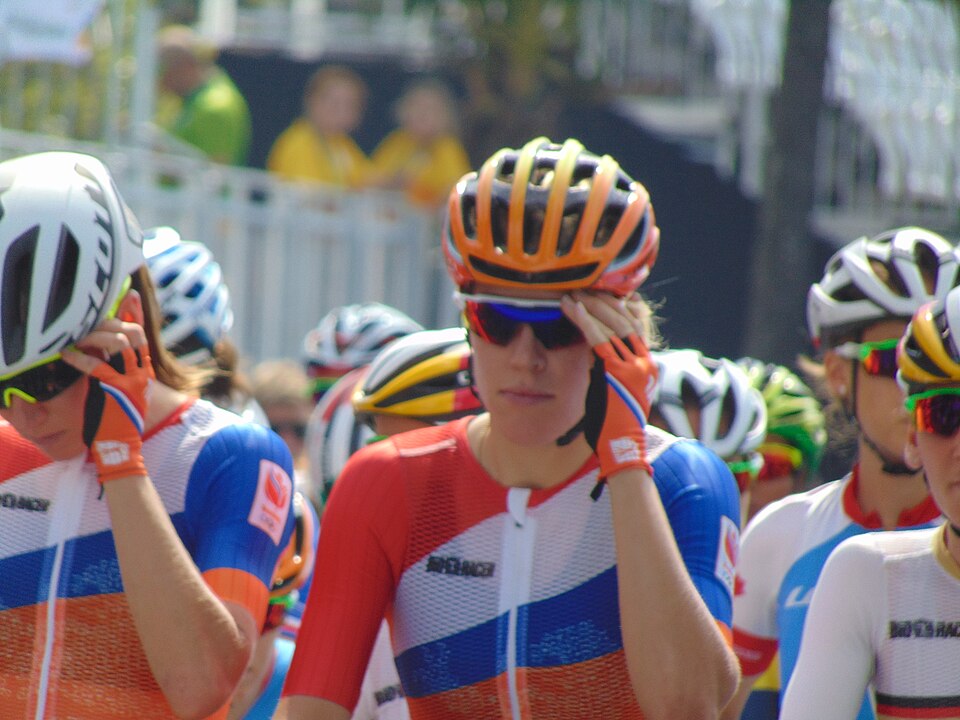
American rider Mara Abbott launched a daring solo breakaway that saw her lead the race for much of the final circuit. Her courageous effort appeared to be heading for a stunning Olympic gold medal victory as she approached the finish line. However, in one of the most heartbreaking moments in Olympic cycling history, Abbott was caught by the chasing trio in the final 100 meters of the race. Her legs, exhausted from the solo effort, couldn’t respond to the final acceleration of the medal contenders.
Abbott’s solo effort was a masterclass in aggressive racing, as she had attacked repeatedly throughout the race and finally established a decisive gap on the final climb. She maintained her lead through the technical descent and onto the flat run-in to the finish, demonstrating incredible strength and determination. The American’s performance earned her widespread admiration, even in defeat, as she had come within meters of achieving what would have been a career-defining victory.
The Chasing Trio: Van der Breggen, Johansson, Longo Borghini
The group that caught Abbott consisted of three of the world’s top riders: Anna van der Breggen from the Netherlands, Emma Johansson from Sweden, and Elisa Longo Borghini from Italy. These three riders represented a mix of climbing specialists and all-rounders who had conserved enough energy during the race to launch their final chase. Their collaboration in the final kilometers demonstrated the tactical sophistication of elite women’s road racing — women’s road cycling.
- Anna van der Breggen – The Dutch climber who would take gold with her superior sprint finish
- Emma Johansson – The Swedish veteran securing her second Olympic silver
- Elisa Longo Borghini – The Italian rider claiming bronze in a strong final effort
The trio’s cooperation was a classic example of how riders without teammates in a breakaway must work together to maximize their collective chances. Each rider took turns at the front, sharing the workload while maintaining the speed necessary to catch Abbott before the finish line. Their tactical awareness and physical conditioning allowed them to execute this plan perfectly in the final dramatic moments of the race.
The Treacherous Descent That Changed Everything
The technical descent that characterized the Rio course proved to be the decisive factor in the race’s outcome. Abbott, while strong on the climbs, struggled to maintain her advantage on the fast, winding descent where the chasing trio could work together more effectively. This section of the course highlighted the importance of being a complete rider in modern road racing, where climbing prowess must be matched with technical descending skills.
The descent featured tight corners, uneven road surfaces, and required riders to take calculated risks to maintain speed. Abbott’s solo effort, while heroic on the climbs, left her vulnerable on the technical sections where the chasing group could share the workload and maintain higher average speeds. The moment when the trio caught sight of Abbott on the descent marked the beginning of the end for her solo bid, as the collective strength of three fresh riders proved too much for the exhausted American.
Post-Race Reflection and “Silver Emma” Legacy
The “What If” Moment: No Sprint Plan
After the race, Johansson described her silver medal as a “what if moment,” revealing that she did not have a specific plan for the final sprint. This honest reflection showcased her tactical approach to racing and her willingness to acknowledge the uncertainties that exist even at the highest level of competition. Despite the lack of a sprint strategy, she expressed pride in her achievement and the way she had competed throughout her career.
Johansson’s reflection on the race highlighted the unpredictable nature of road cycling, where even the most experienced riders can find themselves without a clear plan in the decisive moments. Her ability to still secure silver without a predetermined sprint strategy demonstrated her racing instincts and competitive spirit. The “what if” moment she described has become part of her legacy, representing the fine margins that often separate victory from second place in elite competition.
Completing the Olympic Silver Medal Legacy
The 2016 Rio silver medal completed Johansson’s Olympic legacy, coming exactly eight years after her first Olympic silver in Beijing 2008. This eight-year gap between silver medals demonstrated remarkable consistency at the highest level of the sport. The nickname “Silver Emma” that she had earned through frequent podium finishes at major championships was now cemented with two Olympic silver medals, making her one of the most successful Swedish Olympians in cycling history.
The eight-year interval between her Olympic silvers is particularly noteworthy in a sport where physical decline often limits athletes’ competitive lifespan. Johansson’s ability to remain at the top level for nearly a decade, winning major races and contending for medals across multiple Olympic cycles, speaks to her exceptional talent, dedication, and adaptability. Her Olympic journey, from her first silver in Beijing to her final medal in Rio, represents one of the most consistent performances in women’s cycling history.
World Ranking and Career Context
Johansson’s career context included being ranked as the number one female road cyclist in the world in 2013, a testament to her consistent excellence across multiple seasons. Her major victories included winning the Thüringen Rundfahrt der Frauen three times, the Emakumeen Euskal Bira twice, and the Belgium Tour once. These achievements, combined with her Olympic silvers, established her as one of the most successful and respected riders in women’s professional cycling.
Her career victories demonstrate the versatility that made her such a consistent performer at the highest level. The Thüringen Rundfahrt der Frauen, a multi-day stage race in Germany, requires both climbing ability and time trial skills. The Emakumeen Euskal Bira in the Basque Country is known for its challenging mountain stages. Her ability to win these diverse races, along with her Olympic performances, showcases the complete skill set that defined her career and made her such a formidable competitor in any race situation.
The 2016 Rio Olympic road race represented more than just another competition for Emma Johansson—it was the final chapter of a career defined by consistency, tactical intelligence, and remarkable longevity. Her silver medal in Rio, coming eight years after her first Olympic silver, completed a legacy that few cyclists can match. The dramatic finish, with Mara Abbott’s heartbreaking catch just meters from the line, will forever be remembered as one of the most compelling moments in Olympic road racing history. For Johansson, it was the perfect conclusion to a career that had brought her to the top step of the podium countless times, even if Olympic gold remained just out of reach.