Cycling cadence training is the systematic practice of optimizing pedal revolutions per minute (RPM) to enhance cycling performance, reduce fatigue, and improve overall efficiency. Understanding and training your cadence can transform your riding experience, whether you’re a beginner cyclist or an experienced road racer.
Key Takeaway
-
Cadence is pedal revolutions per minute (RPM). Elite cyclists typically ride 90-105 RPM, beginners 60-85 RPM.
-
Higher cadences shift effort from muscles to cardiovascular system, reducing fatigue.
-
Optimal cadence varies by rider type, experience, and riding conditions.
-
Training should combine high-cadence neuromuscular work with low-cadence strength training.
What Is Cycling Cadence and Why It Matters

Cadence Definition: Pedal Revolutions Per Minute (RPM)
Cadence represents the number of complete pedal revolutions you complete in one minute, measured in revolutions per minute (RPM). This fundamental cycling metric directly influences your power output, energy efficiency, and overall riding comfort. Understanding your cadence is crucial because it determines how your body distributes effort between muscular and cardiovascular systems. Higher cadences engage your aerobic system more effectively, while lower cadences rely heavily on muscular strength and can lead to quicker fatigue in your legs. The beauty of cadence training lies in its ability to help you find your optimal pedaling rhythm for different riding conditions and goals.
Research from cycling performance studies shows that cadence directly affects oxygen consumption and muscle activation patterns. When you pedal at higher RPMs, your body shifts from anaerobic (muscle-based) energy production to more aerobic (oxygen-based) metabolism. This shift is particularly beneficial during long rides where muscular endurance becomes a limiting factor. Additionally, proper cadence training can reduce the risk of overuse injuries by distributing stress more evenly across your joints and connective tissues. The relationship between cadence and power output follows the formula: Power = Cadence × Torque, meaning you can achieve the same power output through different combinations of speed and force application.
Elite vs Beginner Cadence Ranges: 90-105 RPM vs 60-85 RPM
Elite cyclists typically maintain cadences between 90-105 RPM during sustained efforts, with some professionals reaching 110 RPM during intense sprints. This higher cadence range allows them to distribute workload more evenly across their cardiovascular and muscular systems, reducing localized muscle fatigue. In contrast, beginner cyclists often ride at 60-85 RPM, relying more heavily on muscular strength and experiencing faster leg fatigue. The difference in cadence ranges reflects not just fitness levels but also pedaling technique efficiency.
Professional cyclists like Chris Froome and Tadej Pogačar are known for their high-cadence riding styles, which they maintain even during long climbs where many riders would naturally slow their pedaling. This approach keeps their muscles fresher for later stages of races and reduces the buildup of lactic acid in their legs. Studies have shown that experienced cyclists can produce the same power output at different cadences, but they choose higher RPMs to optimize energy systems and delay fatigue. The ability to maintain high cadence also correlates with better bike handling skills and smoother power delivery, which are crucial for competitive racing scenarios.
Core Cadence Training Techniques for Better Efficiency
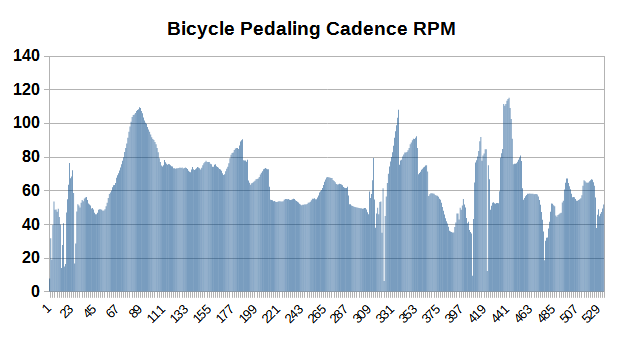
High Cadence Drills: 100-110 RPM for Neuromuscular Speed
-
Perform 5-10 minute sessions of 1-minute high-cadence intervals at 100-110 RPM with 1-minute easy recovery periods between sets
-
Focus on maintaining smooth pedal strokes without bouncing in the saddle during high-cadence efforts
-
Start with shorter intervals (30 seconds) and gradually increase duration as your neuromuscular coordination improves
-
Use a light gear that allows you to maintain the target cadence without excessive resistance
-
Practice these drills on a trainer or flat road where you can maintain consistent effort
High-cadence training develops the neuromuscular pathways that control rapid, coordinated muscle contractions. When you train at 100-110 RPM, you’re teaching your nervous system to fire muscles more quickly and efficiently. This type of training is particularly valuable for improving sprinting ability and maintaining speed during group rides where quick accelerations are frequent. The key to effective high-cadence training is smoothness – you want to avoid bouncing in the saddle, which indicates you’re either in too hard a gear or your pedal stroke needs refinement. Over time, these drills will increase your comfortable cadence range and make higher RPMs feel more natural during regular riding.
Low Cadence Training: 60-70 RPM for Strength Development
-
Complete 5×5 minute intervals in a high gear at 60-70 RPM, maintaining Zone 3 intensity throughout
-
Focus on applying steady, controlled pressure throughout the entire pedal stroke during low-cadence efforts
-
Allow adequate recovery between intervals (3-5 minutes) to maintain quality in subsequent efforts
-
Use these sessions to build leg strength and improve your ability to handle steep climbs
-
Gradually increase resistance or duration as your strength improves over several weeks
Low-cadence training builds the muscular strength and force production capacity that complements your cardiovascular fitness. When you pedal at 60-70 RPM in a high gear, you’re developing the type of leg strength that helps on steep climbs and during powerful accelerations. This training also improves your ability to maintain momentum through technical sections of mountain bike trails or during headwind sections on the road. The controlled, forceful nature of low-cadence work strengthens your connective tissues and can actually help prevent injuries by improving joint stability. However, it’s important to use proper form and not overdo these sessions, as excessive low-cadence training can lead to knee strain if performed incorrectly — road cycling.
Cadence Ladders: Progressive Training for Adaptation
Cadence ladder training combines intervals that transition from low to high RPM, helping your body adapt to varied demands during different riding conditions. Start with a 10-minute warm-up at your natural cadence, then perform intervals that progress from 60 RPM to 110 RPM over 5 minutes, holding each cadence for 1 minute before increasing. This progressive approach teaches your neuromuscular system to handle rapid cadence changes while maintaining power output. The ladder format also improves your ability to shift gears smoothly and efficiently during real-world riding scenarios. Include these sessions once weekly to develop versatility in your pedaling technique and prepare for race situations where cadence requirements change frequently.
Cadence ladders are particularly effective because they mimic the natural cadence variations that occur during real rides. You’ll experience the need to accelerate out of corners, maintain steady effort on flats, and power up climbs – all within a single training session. This variety not only improves your physical capabilities but also enhances your mental awareness of cadence and its relationship to effort level. Over time, you’ll develop an intuitive sense of the most efficient cadence for different situations, allowing you to conserve energy and perform better during long rides or competitive events.
Improving Pedal Efficiency Through Technique
The ‘Scrape’ Technique: Reducing Dead Spots at Bottom Stroke
The scraping technique addresses the most common inefficiency in pedal strokes: the dead spot at the bottom of the revolution. Focus on ‘scraping mud’ off your shoe at the bottom of the stroke, specifically in the 6-8 o’clock position. This mental cue helps you maintain tension on the pedals throughout the entire revolution rather than allowing a brief relaxation period. By actively scraping through this phase, you eliminate the power loss that occurs when your foot simply hangs at the bottom of the stroke.
This technique also promotes a smoother, more circular pedal motion that reduces stress on your knees and improves overall efficiency. Many cyclists unknowingly have significant power losses in the bottom and top quadrants of their pedal stroke. The scraping motion helps maintain continuous power application throughout the entire revolution. To practice this technique, try riding with one leg at a time on a trainer – you’ll immediately feel where your stroke has weaknesses. Once you’ve developed the scraping motion, integrate it into your regular riding, especially during high-intensity efforts where efficiency becomes crucial for performance.
360° Power: Active Pulling Up on Pedals
-
Actively pull up on the pedals during the 8-12 o’clock position rather than just pushing down
-
Imagine scraping your foot backward and then pulling it up through the top of the stroke
-
Maintain consistent tension on the pedals throughout the entire 360-degree revolution
-
Practice single-leg drills to feel the difference between pushing only versus complete pedal strokes
-
Use a cadence sensor to monitor your efficiency – smoother strokes often result in more consistent RPM
The complete pedal stroke involves more than just pushing down – it requires active engagement throughout the entire 360-degree revolution. Many cyclists focus only on the downstroke, missing out on significant power potential from the upstroke and transition phases. By actively pulling up on the pedals during the recovery phase, you create a more balanced power output and reduce the stress on your quadriceps during long rides. This technique also helps maintain momentum and reduces the energy wasted in starting each new pedal stroke from a dead stop.
Professional cyclists spend considerable time developing this complete pedal technique because it translates directly to better performance. The upstroke becomes particularly important during climbing, where every watt of power matters, and during time trials, where efficiency over long durations determines success. To develop this skill, practice riding with a slightly higher cadence than normal while focusing on maintaining tension on the pedals throughout the entire revolution. You should feel a smooth, circular motion rather than a choppy, up-and-down movement.
Isolated Leg Training for Balance and Smoothness
Isolated leg training reveals and corrects imbalances between your left and right legs while improving overall pedal stroke smoothness. On a trainer, unclip one foot and pedal with only one leg for 30-60 second intervals. This drill highlights weaknesses in your pedal technique, such as dead spots, inconsistent power application, or balance issues. You’ll quickly notice if one leg is significantly stronger or if you have trouble maintaining smooth circles with a single leg.
Perform 3-5 sets per leg, alternating between legs with 30-second rest periods. Over time, this training develops better neuromuscular coordination and creates a more balanced, efficient pedal stroke that translates to improved performance when both legs are engaged. Many cyclists are surprised to discover they have a dominant leg that does significantly more work than the other. Addressing these imbalances not only improves power output but also reduces the risk of overuse injuries that can develop from compensating for weak sides. Include isolated leg training in your routine once or twice weekly, especially during base training periods when you’re focusing on technique development.
The most surprising finding in cadence training research is that there’s no single “optimal” cadence that works for everyone. What matters most is your ability to maintain smooth, efficient pedal strokes across different RPM ranges. Elite cyclists succeed not because they ride at exactly 95 RPM, but because they’ve trained their bodies to be efficient at various cadences and can adapt to different riding conditions. The key action step is to start incorporating cadence-specific drills into your training routine immediately. Begin with just one high-cadence and one low-cadence session per week, focusing on technique rather than speed or power. Track your progress with a cadence sensor and watch as your efficiency and endurance improve over time.