Aerodynamic drag is the primary resistance in road cycling, accounting for 70-90% of total forces at speeds over 25 km/h (15 mph), rising exponentially with velocity (drag ∝ v², power ∝ v³). This means that at typical road cycling speeds, aerodynamics dominates everything else, making it the single most important factor for speed improvement.
Key Takeaway
-
Aerodynamic drag accounts for 70-90% of total resistance at speeds over 25 km/h
-
Rider position contributes ~80% of total drag while equipment accounts for ~20%
-
Small CdA reductions yield 1-2 km/h gains at constant power
Why Aerodynamics Dominates Your Cycling Speed
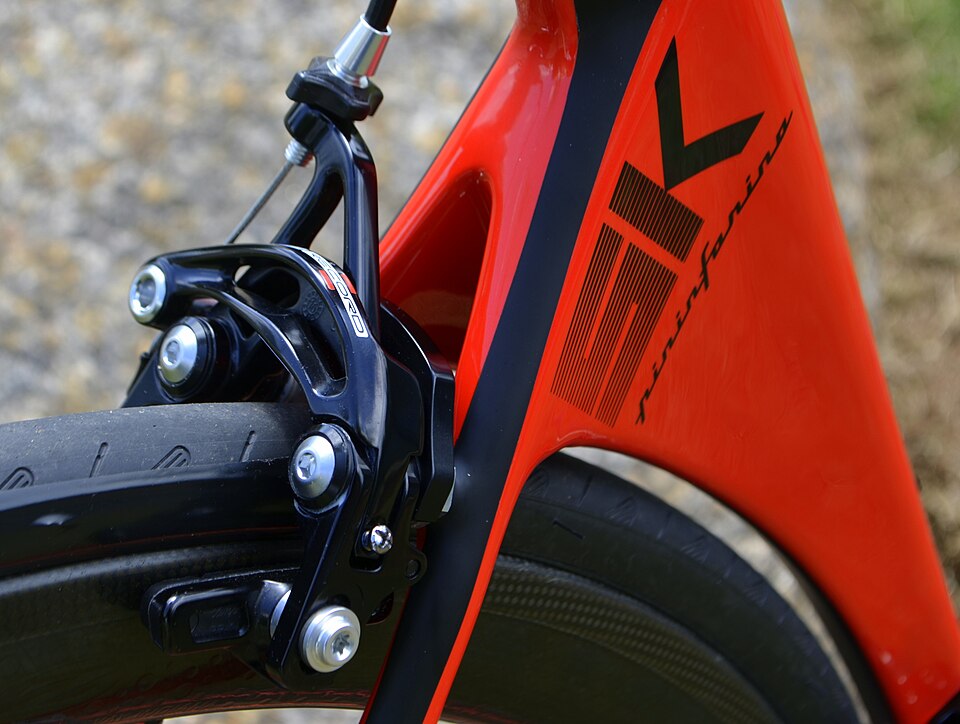
Aerodynamic drag: 70-90% of resistance above 25 km/h
Aerodynamic drag becomes the dominant force you’re fighting against once you exceed 25 km/h (15 mph). At these speeds, air resistance accounts for 70-90% of the total forces slowing you down. The physics behind this is straightforward: drag increases with the square of velocity (drag ∝ v²), while the power required to overcome that drag increases with the cube of velocity (power ∝ v³). This exponential relationship means that doubling your speed requires eight times the power to overcome air resistance. For example, at 40 km/h, aerodynamic drag represents about 90% of total resistance, leaving only 10% for rolling resistance, drivetrain friction, and gravity on flat terrain. The power cube law explains why small improvements in aerodynamics yield disproportionately large speed gains – reducing drag by just 10% can result in 15-20% faster speeds at constant power output.
Rider body vs equipment: 80% vs 20% of total drag
The surprising truth about cycling aerodynamics is that your body position contributes about 80% of total aerodynamic drag, while your equipment accounts for only 20%. The frame itself represents just a fraction of that equipment drag. This means that sitting on the bike is the biggest aerodynamic factor, not the bike itself. A rider in an upright position creates a large frontal area that air must push against, while equipment like wheels, frames, and helmets contribute relatively little in comparison. This 80/20 split explains why professional cyclists spend hours perfecting their position in wind tunnels rather than focusing solely on expensive equipment upgrades. The human body, with its irregular shapes and moving parts, creates far more turbulence and drag than the smooth, engineered surfaces of modern bicycles. Even the most aerodynamic bike frame cannot overcome poor rider positioning, which is why position optimization should be the first priority for any cyclist seeking speed improvements.
How to Reduce Drag: Position and Equipment
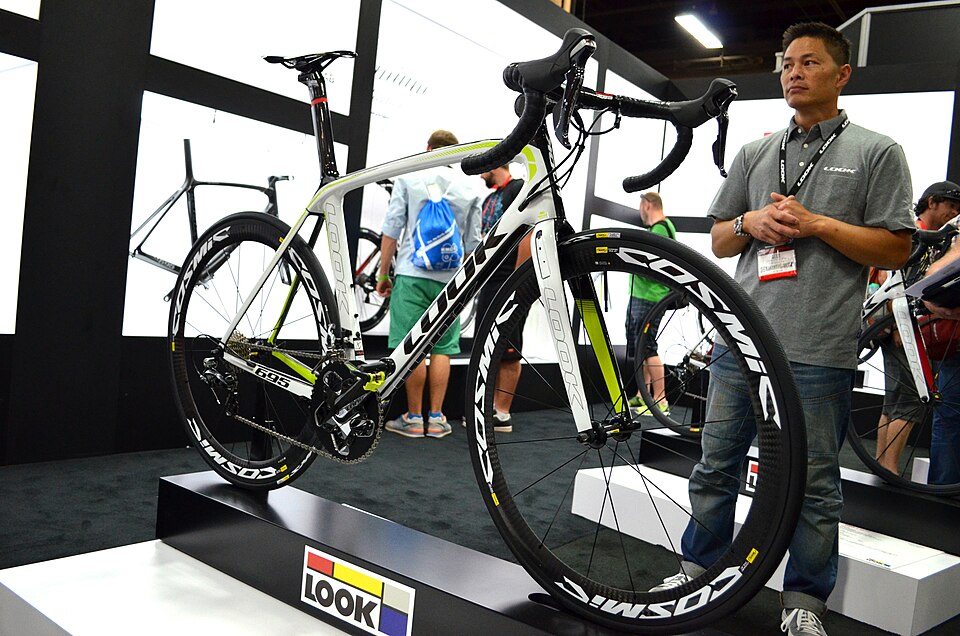
Optimize your riding position: 10-20W savings at 40 km/h
-
Low torso angle: Dropping your chest closer to the handlebars reduces frontal area by 15-20%, saving 5-8 watts at racing speeds. Studies show that lowering your torso by just 10 degrees can reduce CdA by 0.003-0.005m²
-
Narrow elbow position: Bringing elbows closer together reduces frontal area and can save 3-5 watts by creating a more streamlined profile. The optimal width is typically shoulder-width or slightly narrower
-
Head position: Tucking your head behind your hands rather than looking straight ahead can save 2-4 watts by reducing the frontal profile. This also improves stability in crosswinds
-
Seat position: A slightly forward seat position allows a more aggressive, aerodynamic posture while maintaining power output. Moving the saddle forward by 1-2 cm can improve aerodynamics without sacrificing comfort
-
Arm angle: Flaring your arms slightly outward rather than keeping them perfectly parallel can actually reduce drag by smoothing airflow around your body
These position adjustments can yield 10-20 watts of savings at 40 km/h, which translates to significant speed gains. For context, a CdA (drag area) reduction of just 0.01m² equals approximately 1 km/h faster at 300W power output and 40 km/h speed. This demonstrates how small positioning improvements compound into meaningful performance benefits. The key is finding a position that balances aerodynamics with comfort and power output – an extreme position that causes discomfort will ultimately hurt performance more than it helps.
Equipment upgrades: wheels, frames, and clothing
-
Aero wheels: Deep-section wheels can save 5-15 watts compared to standard wheels by reducing turbulence around the spokes and rim. The savings increase with speed and wind conditions, with the greatest benefits above 30 km/h
-
Aero frames: Purpose-built aerodynamic frames can provide 0.5-1 km/h speed advantage over standard frames through optimized tube shapes and integration. Modern aero frames use truncated airfoil shapes that balance aerodynamics with UCI regulations
-
Skinsuits: Tight-fitting aerodynamic clothing reduces fabric drag and can save 3-8 watts compared to loose-fitting jerseys. The material texture and seam placement significantly impact aerodynamic performance
-
Aero helmets: Streamlined helmets with minimal vents can save 2-5 watts by smoothing airflow over the head. The tail length and shape should match your riding position for optimal performance
-
Handlebar integration: One-piece bar and stem combinations can save 1-3 watts by reducing frontal area and improving airflow around the cockpit area
While equipment upgrades are less impactful than position changes (remember the 80/20 rule), they still provide measurable benefits. Aero wheels represent one of the best value upgrades, offering significant drag reduction without requiring changes to your riding technique. The combination of optimal position and aerodynamic equipment creates a multiplicative effect on performance. For example, a rider with perfect position on an aero bike with deep wheels might achieve 30-40 watts of total drag reduction compared to a rider in poor position on a standard bike.
Drafting and Crosswinds: Advanced Aerodynamics
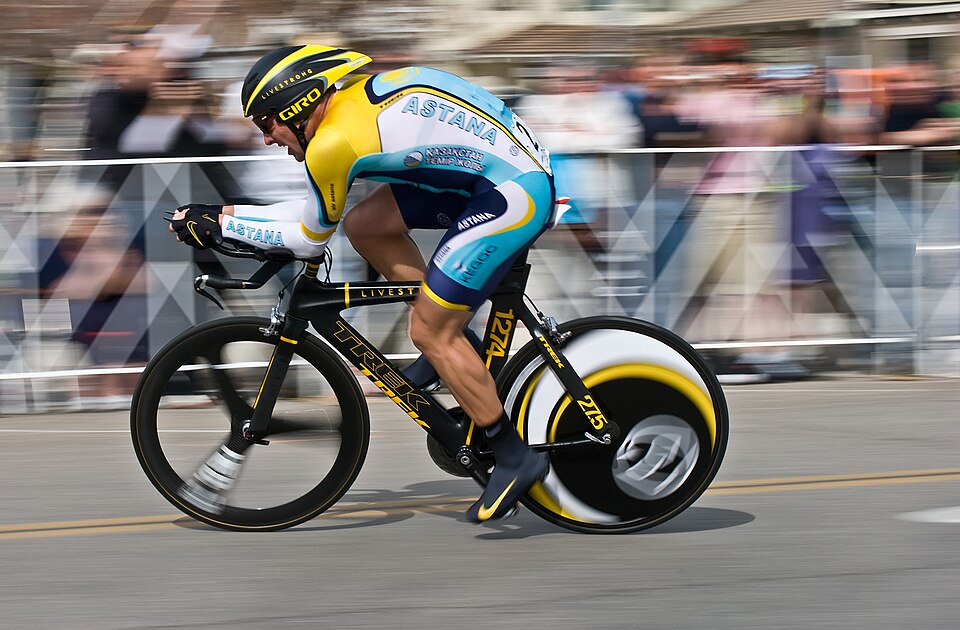
Drafting cuts drag up to 40%
Drafting behind another rider is one of the most effective ways to reduce aerodynamic drag, cutting it by up to 40%. This energy-saving technique works because the rider in front creates a wake of turbulent air that the following rider can slip through with less resistance. The energy savings are substantial – drafting at close range can reduce the power needed to maintain a given speed by 25-40%. This is why drafting is such a crucial strategy in road racing, allowing riders to conserve energy for crucial moments. Even riding slightly offset behind another rider provides significant drag reduction compared to riding alone in the wind. The effectiveness of drafting depends on the gap between riders – riding within 30-50 cm of the wheel in front provides maximum benefit, while gaps of 1-2 meters still offer 15-25% drag reduction. Understanding drafting dynamics is essential for competitive cyclists, as it can mean the difference between winning and losing in a race situation.
Crosswinds and yaw angle effects
Crosswinds dramatically affect aerodynamic performance by changing the effective yaw angle – the angle between your direction of travel and the apparent wind direction. When crosswinds hit your bike, they can actually reduce drag in some cases by smoothing airflow, but they also create stability challenges. Modern aero wheels and frames are designed with specific rim depths and shapes to perform optimally at various yaw angles. Narrower wheels, trending in 2026 designs, aim to reduce weight without altering tire performance while maintaining aerodynamic efficiency across different wind conditions. The ‘V’ shape of aerodynamic drag graphs shows that as wind comes more from the side, drag initially decreases before increasing again at extreme angles, highlighting the complex relationship between crosswinds and aerodynamic efficiency. Yaw angle optimization is why professional cyclists use different wheel depths for different race conditions – shallow rims for climbing and crosswind situations, deep rims for flat, calm conditions. Understanding how your equipment performs across the full range of yaw angles can help you make smarter equipment choices for specific events and conditions.
The most surprising finding in cycling aerodynamics is that rider position matters far more than equipment – the 80/20 split means you can achieve greater speed gains by perfecting your position than by buying expensive aero gear. For immediate improvement, focus on lowering your torso angle and narrowing your elbows while maintaining comfort and power output. These simple adjustments can save 10-20 watts at racing speeds, equivalent to gaining 1-2 km/h without any equipment changes. The best approach combines optimal positioning with strategic equipment upgrades, creating a comprehensive aerodynamic strategy that maximizes your speed potential on the road.