Power meters and heart rate monitors transform cycling training from guesswork into science by providing objective data about your effort and progress. These tools help beginners train more effectively by showing exactly how hard your body is working, whether you’re building endurance or pushing for speed.
Key Takeaway
-
Power meters measure watts while heart rate monitors track beats per minute – both provide essential training data
-
Beginners should train 3-4 days per week for 30-90 minutes using Zone 2 (56-75% of FTP) for base building
-
FTP testing via 12-minute all-out effort establishes your baseline power zones for structured training
What Power Meters and Heart Rate Monitors Actually Measure
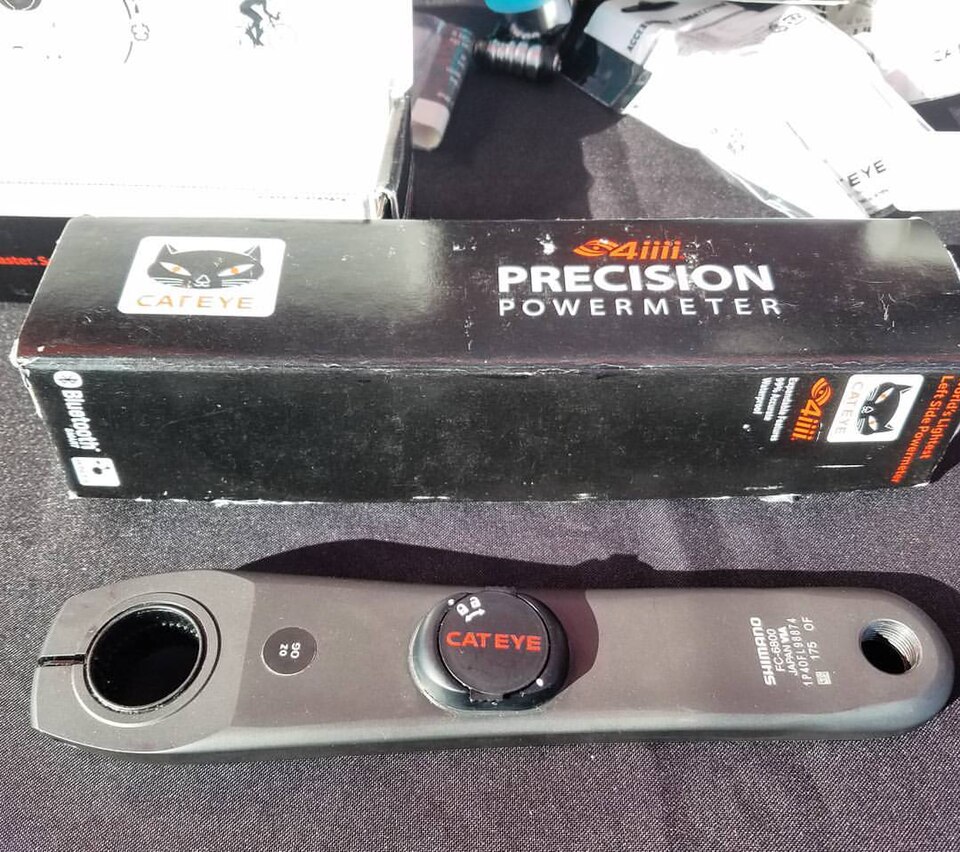
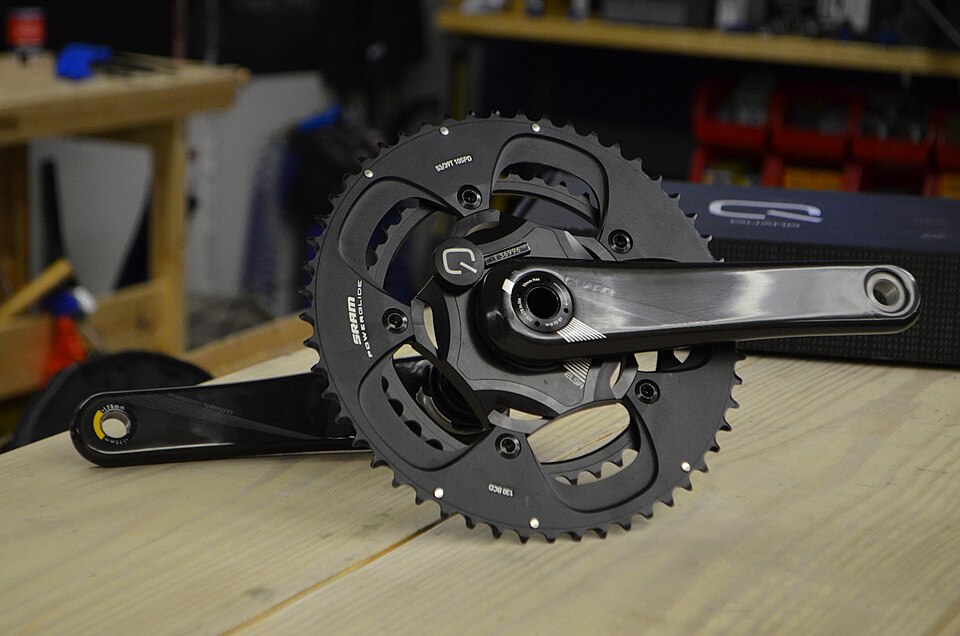
Power measured in watts vs heart rate in beats per minute
Power meters use strain gauges to measure torque and calculate watts – Wikipedia | Heart rate monitors track beats per minute to show physiological stress – AIO | Power gives instant feedback while heart rate has 1-2 minute delay – COROS
-
Power measurement: Power meters calculate watts by measuring force applied to the pedals through strain gauges. This gives immediate, objective feedback about your effort level.
-
Heart rate tracking: Heart rate monitors count beats per minute to show how hard your cardiovascular system is working. This reflects your body’s physiological response to effort.
-
Response timing: Power data appears instantly on your head unit, while heart rate takes 1-2 minutes to stabilize at a new effort level. This delay means power shows current effort while heart rate shows accumulated stress.
Typical power meter cost range: $300-$2000 vs heart rate monitor affordability
Power meter cost range: $300-$2000 – AIO | Heart rate monitors are more affordable entry point – competitor analysis | Stages, Garmin, Wahoo offer different price points – AIO
Power meters represent a significant investment compared to heart rate monitors. Entry-level power meters start around $300 for single-sided crank-based units, while high-end dual-sided models can exceed $2000. Heart rate monitors, by contrast, range from $50 for basic chest straps to $200 for advanced optical wrist sensors. Stages, Garmin, and Wahoo each offer power meter options at different price points, with Stages focusing on affordability, Garmin on integration with existing ecosystems, and Wahoo on premium features.
Setting Up Your Training Zones with FTP Testing
12-minute FTP test: Warm up then ride all-out for 12 minutes
FTP is maximum average power for one hour – AIO | 12-minute test: FTP = 92% of average power – AIO | Threshold heart rate found similarly – AIO
Functional Threshold Power (FTP) represents the highest power you can sustain for approximately one hour. Since most beginners can’t complete a full hour test, the 12-minute protocol provides a practical alternative. After a thorough warm-up, ride as hard as you can sustain for 12 minutes. Your FTP equals 92% of your average power during this test. For heart rate, perform a similar test and note the highest average heart rate you can maintain for 12 minutes – this becomes your threshold heart rate. These baseline numbers establish your training zones and allow you to track fitness improvements over time.
The testing protocol matters significantly. Start with 15 minutes of easy spinning, then 10 minutes at moderate effort, followed by 3×1-minute high-cadence efforts with 1-minute recovery. For the actual test, find a flat, wind-protected road or use a trainer. Maintain consistent cadence (85-95 RPM) throughout. Record your power and heart rate data, then analyze it using your cycling computer or training software. Most platforms like TrainingPeaks, Zwift, or Garmin Connect will automatically calculate your FTP and create your personalized training zones — road cycling.
Standard heart rate zones: Zone 1-5 (Recovery to Anaerobic)
Zone 2 Endurance: 56-75% of FTP – AIO | 60-70% max HR for base training – Hincapie | Zone 3 Tempo: 3×10 min intervals with 5 min rest – AIO
|
Zone |
Power Range |
Heart Rate Range |
Purpose |
|---|---|---|---|
|
Zone 1 |
≤55% FTP |
≤60% max HR |
Active recovery |
|
Zone 2 |
56-75% FTP |
60-70% max HR |
Endurance base |
|
Zone 3 |
76-90% FTP |
71-80% max HR |
Tempo training |
|
Zone 4 |
91-105% FTP |
81-90% max HR |
Lactate threshold |
|
Zone 5 |
≥106% FTP |
≥90% max HR |
Anaerobic capacity |
Understanding these zones prevents the most common beginner mistake: training too hard on easy days. Zone 2 training, often called “polarized training,” forms the foundation of most successful cycling programs. This zone builds aerobic capacity without accumulating excessive fatigue. You should be able to maintain a conversation while riding in Zone 2 – if you’re breathing too hard to talk, you’re likely in Zone 3 or higher. Zone 3 training improves your ability to sustain moderate efforts, while Zone 4 work increases your lactate threshold – the point where fatigue rapidly accumulates. Zone 5 training develops your ability to produce maximum power for short bursts, but this should comprise only 10-15% of your total training time.
Beginner Weekly Training Structure and Progress Tracking
Start with 30-45 minute sessions, 3-4 rides per week
Build to 1.5-2 hours by 8-week period – AIO | Sample week: Day 1 Zone 2, Day 3 intervals, Day 5 long ride – AIO | Allow 1-2 rest days to prevent burnout – AIO
-
Week 1-2: Three 30-minute rides at Zone 2 intensity, focusing on consistent cadence and breathing
-
Week 3-4: Add a fourth ride, increase duration to 35-40 minutes, include one 20-minute Zone 2 session
-
Week 5-6: Build to 45-minute rides, add one Zone 3 interval session (3×8 minutes with 3-minute recovery)
-
Week 7-8: Target 60-minute rides, include one longer weekend ride at Zone 2 (75-90 minutes)
This progressive structure allows your body to adapt gradually while minimizing injury risk. The key principle is consistency over intensity – four moderate rides produce better results than two hard rides followed by a week off. Track your weekly training stress using TSS (Training Stress Score) or simply note your total ride time and average intensity. Most beginners should target 200-300 TSS points per week, gradually increasing by 10% each week.
Sample week structure:
-
Monday: Rest or active recovery (Zone 1, 30 minutes)
-
Tuesday: Zone 2 endurance ride (45-60 minutes)
-
Wednesday: Rest
-
Thursday: Zone 3 intervals (3×8 minutes at 80% FTP, 3-minute recovery)
-
Friday: Rest or easy spin
-
Saturday: Zone 2 endurance ride (60-75 minutes)
-
Sunday: Longer Zone 2 ride (90+ minutes) or rest
Monitor heart rate drift to detect fatigue and track progress
HR should remain stable at given power in Zone 2 – AIO | Rising HR at same power indicates fatigue – TrainingPeaks | Use Strava or Garmin Connect to log data – AIO
Heart rate drift reveals your body’s adaptation to training. In Zone 2 rides, your heart rate should stay within a 5-beat range when power remains constant. If your heart rate rises 10+ beats over a 60-minute ride at the same power, you’re likely fatigued and need recovery. Track this data using Strava or Garmin Connect to see trends over weeks. You should notice your power increasing at the same heart rate, or your heart rate decreasing at the same power – both indicate improving fitness. Regular FTP testing every 6-8 weeks quantifies your progress and updates your training zones.
Beyond basic drift monitoring, advanced metrics provide deeper insights. Heart rate variability (HRV) measures the variation between heartbeats and indicates your recovery status. Higher HRV suggests good recovery, while lower HRV indicates fatigue or stress. Many modern cycling computers and smartwatches track HRV automatically. Another useful metric is power-to-weight ratio, calculated by dividing your FTP by your weight in kilograms. This number matters more than absolute power for climbing and racing performance. A recreational cyclist with an FTP of 200 watts weighing 70 kg has a 2.86 W/kg ratio, while a 90 kg rider with 240 watts FTP has only 2.67 W/kg.
The most surprising finding for beginners is how much easier training becomes when you stop guessing and start using data. Many cyclists discover they’ve been training too hard on easy days and too easy on hard days. The simple act of staying in Zone 2 for base training often leads to faster progress than constantly pushing to your limits. Your next step: choose one metric to focus on – either power or heart rate – and commit to training within your zones for the next four weeks. You’ll be amazed at how structured training transforms your cycling performance.