Indoor cycling training for beginners at home has become increasingly popular, especially with the rise of smart trainers and online workout platforms. According to Olympic cyclist Emma Johansson, nicknamed “Silver Emma” for her two Olympic silver medals, proper setup and core stability are essential for preventing injury and improving performance. Her approach emphasizes consistency over intensity, making it perfect for beginners starting their indoor cycling journey.
- Follow Emma Johansson’s 5-20-5 minute workout structure: 5 min warm-up, 20 min intervals, 5 min cool-down
- Incorporate 6 core stability exercises using a Swiss ball to prevent injury
- Apply the 80/20 rule: 80% easy pace, 20% hard efforts for sustainable progress
What Is the Best Indoor Cycling Workout Structure for Beginners?

The most effective indoor cycling workout structure for beginners follows Emma Johansson’s proven 5-20-5 minute format. This approach balances workout effectiveness with injury prevention and sustainable progress.
Emma Johansson’s 5-20-5 Minute Beginner Workout Plan
This structured workout plan provides beginners with a complete indoor cycling session they can follow immediately:
Warm-up (5 minutes):
- Start with low resistance and gentle pedaling
- Focus on smooth pedal strokes and proper form
- Gradually increase cadence to get blood flowing
- Keep intensity very low – you should be able to hold a conversation
Interval Training (20-30 minutes):
- Alternate between high-intensity and low-intensity periods
- Example: 30 seconds of hard pedaling followed by 1-2 minutes of easy spinning
- During high-intensity intervals, increase resistance or cadence significantly
- During recovery periods, maintain light resistance and relaxed pedaling
- Total interval time should be 20-30 minutes depending on fitness level
Cool-down (5 minutes):
- Return to very low resistance and gentle pedaling
- Focus on deep breathing and relaxation
- Allow heart rate to gradually decrease
- Finish with light stretching if desired
Understanding the 80/20 Rule for Sustainable Progress
The 80/20 rule is crucial for beginners to understand: spend 80% of your training time at an easy, comfortable pace and only 20% on harder efforts. This approach, recommended by Emma Johansson, prevents burnout and injury while building a solid fitness foundation.
Many beginners make the mistake of going too hard too soon, which often leads to fatigue, soreness, or even injury. The 80/20 rule ensures you’re challenging your body appropriately while allowing adequate recovery time. Consistency matters more than intensity – it’s better to complete three moderate 30-minute sessions per week than one exhausting 90-minute session. For a structured approach, consider following a beginner cycling training plan.
Which Core Stability Exercises Should Beginners Do for Indoor Cycling?
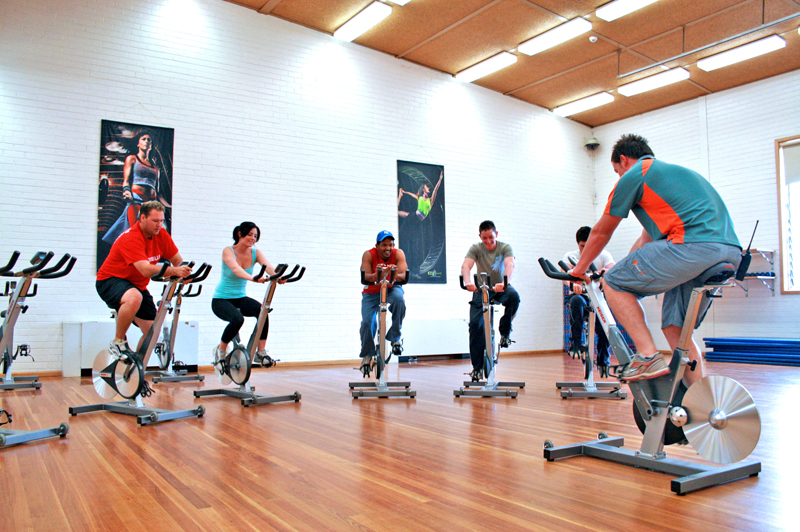
Core stability is essential for cycling performance and injury prevention. Emma Johansson recommends 6 specific core stability exercises that can be done at home with minimal equipment, primarily using a Swiss ball — road cycling.
Emma Johansson’s 6 Core Stability Exercises for Cyclists
These exercises target the core muscles that support proper cycling posture and power transfer:
1. Swiss Ball Plank
- Position forearms on the Swiss ball, body in straight line from head to heels
- Hold for 30-60 seconds, focusing on maintaining stability
- This exercise strengthens the entire core and improves balance
2. Swiss Ball Roll-Out
- Start in plank position with forearms on Swiss ball
- Slowly roll the ball forward, extending arms while maintaining core engagement
- Roll back to starting position and repeat 10-15 times
- This targets the rectus abdominis and improves core control
3. Bicycle Crunches
- Lie on your back with hands behind head, knees bent
- Alternate bringing opposite elbow to opposite knee in a pedaling motion
- Perform 15-20 repetitions per side
- This mimics the rotational movement used in cycling
4. Superman Holds
- Lie face down with arms extended forward
- Lift arms, chest, and legs off the ground simultaneously
- Hold for 5-10 seconds, then lower back down
- Repeat 10-15 times to strengthen lower back muscles
5. Russian Twists
- Sit on the floor with knees bent, holding a weight or medicine ball
- Lean back slightly and lift feet off the ground
- Rotate torso side to side, touching the weight to the floor beside you
- Perform 15-20 repetitions per side to improve rotational stability
6. Side Plank with Hip Dips
- Lie on your side with elbow directly under shoulder
- Lift hips off the ground, forming a straight line
- Lower hips toward the floor, then lift back up
- Hold for 30-60 seconds per side to strengthen obliques
Using a Swiss Ball for Core Training
The Swiss ball adds an element of instability that forces your core muscles to work harder to maintain balance. When using a Swiss ball for these exercises:
- Choose the correct size ball for your height (typically 55-75cm)
- Ensure the ball is properly inflated – it should compress slightly under your weight
- Start with basic exercises and progress to more challenging variations
- Maintain proper form throughout each exercise – quality over quantity
- Breathe steadily and avoid holding your breath
Swiss ball training improves proprioception (body awareness) and strengthens the deep core muscles that are crucial for maintaining proper cycling position, especially during long indoor sessions.
How Should Beginners Set Up Their Indoor Cycling Space at Home?
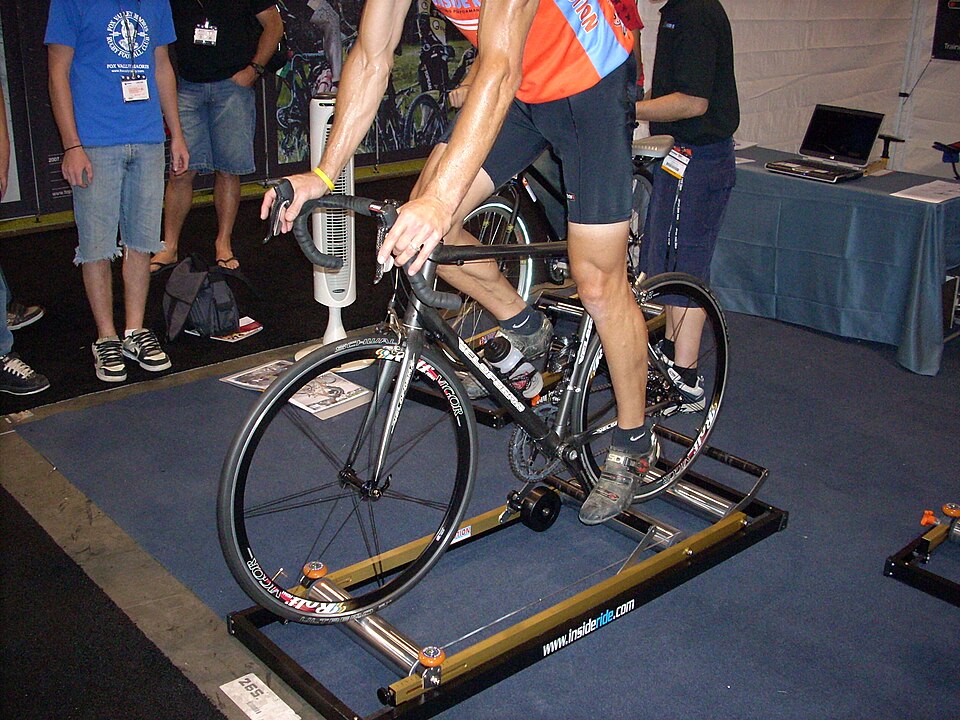
Creating a proper indoor cycling setup is essential for comfort, safety, and effective training. Emma Johansson emphasizes that proper bike fit and environment setup can prevent many common cycling injuries.
Essential Bike Fit Adjustments for Comfort
Proper bike fit is crucial for preventing discomfort and injury during indoor cycling sessions:
Saddle Height:
- Stand next to your bike and adjust the saddle to hip height
- When seated, your leg should have a slight bend (about 25-30 degrees) at the bottom of the pedal stroke
- Too high causes hip rocking; too low stresses the knees
Handlebar Position:
- For beginners, handlebars should be approximately level with or slightly higher than the saddle
- This upright position reduces strain on the lower back and neck
- As flexibility improves, you can gradually lower the handlebars
Seat Angle:
- The saddle should be level or slightly nose-down (1-2 degrees)
- A level saddle provides the most comfortable weight distribution
- Too much tilt in either direction causes discomfort and pressure points
Pedal Position:
- Ensure cleats (if using clipless pedals) are properly aligned
- Your knee should track over the ball of your foot when pedaling
- Adjust fore/aft position so the forward knee is over the pedal axle when cranks are horizontal
Creating a Safe and Effective Home Cycling Environment
Beyond bike fit, your indoor cycling space should be optimized for comfort and safety:
Space Requirements:
- Ensure at least 6 feet of clearance around the bike
- Position the bike on a stable, level surface
- Use a trainer mat to protect floors and reduce vibration
Ventilation:
- Indoor cycling generates significant heat and sweat
- Position a fan nearby for cooling
- Ensure good air circulation in the room
- Consider exercising near an open window when weather permits
Hydration:
- Keep a water bottle within easy reach
- Indoor cycling can cause significant fluid loss through sweat
- Drink regularly throughout your session, not just when thirsty
Entertainment and Motivation:
- Position a TV, tablet, or phone at eye level for entertainment
- Many beginners find virtual cycling platforms motivating
- Consider using a heart rate monitor to track intensity
- Create a playlist of energizing music to maintain motivation
The key to successful indoor cycling training is creating an environment where you feel comfortable and motivated to train consistently. Emma Johansson’s approach emphasizes that a proper setup, combined with the right workout structure and core exercises, creates the foundation for long-term cycling success.
Starting with the 30-minute beginner workout structure outlined above, you can build a solid fitness base while preventing the common mistakes that derail many new cyclists. Remember, the goal is sustainable progress through consistency, not short-term gains through excessive intensity. For more detailed guidance, check out Essential Cycling Tips for Beginners Starting Their Journey.