Every gram on your road bike affects performance, but the real question is: how much does it actually matter? Research shows that 1kg of weight savings translates to just 0.08 km/h faster average speed on flat terrain, yet can save 30-40 minutes over a 3900km ultra-distance ride. The impact varies dramatically based on terrain, riding style, and whether you’re racing or commuting.
Key Takeaway
-
1kg lighter = 0.08 km/h faster average speed; saves 30-40 minutes over 3900km route
-
Weight matters most on climbs >4% gradient; aerodynamics dominate on flats
-
Total system weight (rider + bike + gear) matters more than bike weight alone
-
Rotational weight (wheels/tires) yields biggest performance gains per gram saved
How Much Does 1kg Weight Savings Really Matter?
The Real Speed Impact: 0.08 km/h per Kilogram
Research from Ride Far demonstrates that 1kg of weight reduction provides a modest but measurable speed advantage. On flat terrain, you’ll gain approximately 0.08 km/h in average speed. This translates to about 1 minute saved per 100km ridden. For a 200km sportive ride, that’s roughly 2 minutes of time savings.
The impact becomes more pronounced on climbs. A 2kg reduction on a 5km climb at 200W power output yields over 40 seconds of time savings. This is because gravity’s effect multiplies with weight – every extra kilogram requires more power to overcome uphill resistance.
Over ultra-distance events, the cumulative effect becomes substantial. A rider reducing total system weight from 85kg to 80kg (including bike and gear) gains 0.41 km/h average speed and saves 3 hours 23 minutes over a 3899km route like the Transcontinental Race.
Let’s break down the numbers further. For a typical weekend warrior riding 200km sportives, 1kg weight savings means arriving at the finish line approximately 2-3 minutes earlier. While this might not sound dramatic, consider that this time saving requires no additional training or effort – just equipment optimization.
The relationship between weight and speed isn’t linear. The first kilogram saved often provides the most noticeable improvement in handling and acceleration, while subsequent weight reductions yield diminishing returns. This is why professional teams carefully balance weight savings against other factors like stiffness and aerodynamics.
Time Savings: When Every Second Counts
|
Ride Type |
Distance |
1kg Weight Savings |
Time Saved |
Relative Impact |
|---|---|---|---|---|
|
Flat 100km |
100km |
1kg lighter |
~1 minute |
0.17% |
|
5km climb |
5km |
2kg lighter |
40 seconds |
2.2% |
|
Ultra-distance |
3900km |
5kg lighter |
30-40 minutes |
1.5% |
|
Daily training |
Various |
1kg lighter |
2-3 minutes/day |
0.5% |
|
Criterium race |
60 minutes |
1kg lighter |
2-3 seconds |
0.8% |
The time savings data reveals an interesting pattern. While absolute time savings seem small on shorter rides, the relative impact becomes more significant on climbs and ultra-distance events. In a criterium race lasting 60 minutes, 1kg weight savings might only save 2-3 seconds, but in a mountain stage race, those seconds compound across multiple climbs. Finding the best cycling routes near you can help you practice these scenarios — road cycling.
For ultra-distance cyclists, the 30-40 minute savings over 3900km represents a substantial advantage. This translates to arriving at checkpoints earlier, having more rest time, and potentially avoiding riding in the dark. The psychological benefit of knowing you’re traveling slightly faster with the same effort shouldn’t be underestimated.
Where Weight Matters Most: Terrain and Riding Style
Climbing: The Weight Advantage Zone
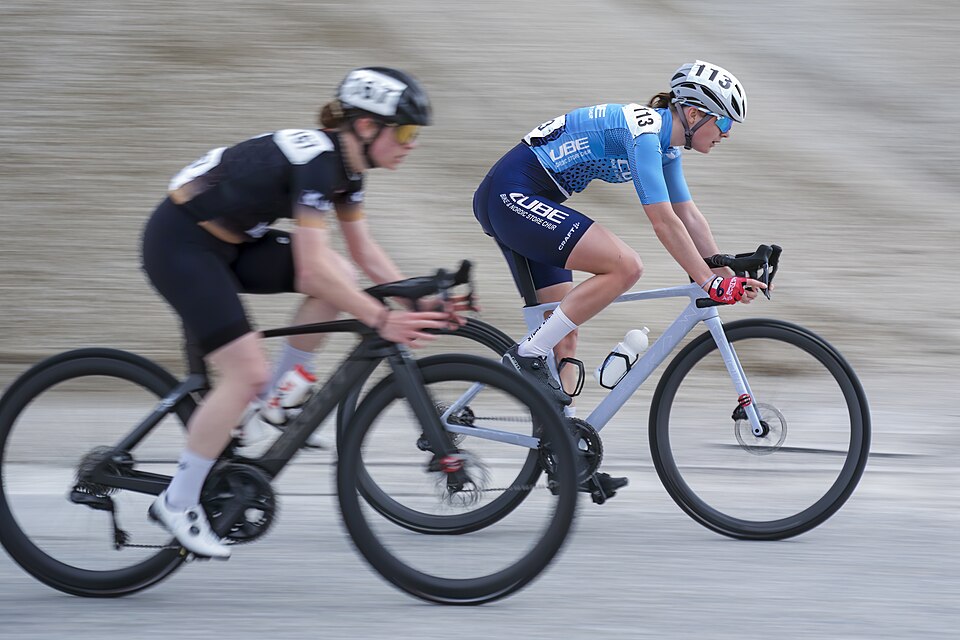
Weight becomes the dominant performance factor on climbs exceeding 4% gradient. Research shows speed gains of 5-6% on these steep ascents when reducing weight. This is where power-to-weight ratio (W/kg) becomes the critical metric – a rider producing 4W/kg will climb significantly faster than one at 3.5W/kg, regardless of bike weight.
Cervélo Engineering research confirms that for amateur cyclists, weight matters more than aerodynamics above 4-5% gradient. The physics are straightforward: gravity’s pull increases with weight, so every gram saved directly reduces the power needed to maintain speed uphill.
Professional racers optimize for this scenario, with UCI minimum bike weights of 6.8kg ensuring a baseline. However, for most recreational riders, the total system weight – including the rider – matters far more than the bike alone.
Consider a typical scenario: two riders both producing 250W on a 6% grade climb. Rider A weighs 70kg with a 7kg bike (77kg total), while Rider B weighs 80kg with the same 7kg bike (87kg total). Despite identical power output, Rider A will climb approximately 13% faster due to the better power-to-weight ratio.
This explains why professional climbers are often lighter than their sprinter counterparts. In Grand Tours, the difference between winning and losing a mountain stage can come down to these small weight advantages compounded over multiple climbs.
Flats and Descents: Why Aero Beats Weight
On flat terrain and descents, aerodynamics completely overshadow weight considerations. Research shows that on flats, 1kg of weight savings provides only 0.1 km/h speed gain – barely noticeable in real-world riding. The dominant resistance at speed is air drag, not gravity.
Interestingly, lighter bikes can actually be slightly slower on descents. Heavier bikes maintain momentum better through corners and require less braking, while lighter bikes may need more frequent speed checks on steep downhills.
The crossover point where weight becomes more important than aerodynamics occurs around 4-5% gradient for most amateur riders. Below this threshold, investing in aero wheels, frames, and positioning yields better returns than chasing grams.
For time trial specialists and triathletes, this means prioritizing aerodynamic optimization over weight reduction. A deep-section aero wheelset might weigh 200-300 grams more than a lightweight climbing wheelset but provide 30-60 seconds advantage over a 40km time trial.
The practical implication is that crit racers and flat-stage specialists should focus their upgrade budget on aerodynamic improvements rather than weight savings. A 500-gram frame weight reduction might cost $3000-5000, while aero improvements often provide better value per dollar spent.
Smart Weight Savings: What to Upgrade First

Rotational Weight: The Biggest Bang for Your Buck
Not all weight savings are created equal. Rotational weight – found in wheels, tires, and pedals – has disproportionately large effects on acceleration and climbing performance. This is because rotating mass requires energy to both move forward and spin up to speed. Proper bike maintenance also ensures your wheelset performs optimally.
The Pro’s Closet identifies lightweight wheels and tires as the highest ROI upgrade for performance gains. A high-quality wheelset upgrade can save 300-500 grams while dramatically improving acceleration and climbing feel.
Consider the physics: reducing wheel weight by 200 grams feels more significant than reducing frame weight by the same amount because wheels rotate. The energy required to accelerate rotating mass follows the formula E = ½mv² + ½Iω², where the rotational component makes wheel weight particularly impactful.
Typical road bike weights range from 15-17 lbs (6.8-7.7 kg) for high-end models. Going below this range often requires expensive materials like carbon fiber and may compromise durability. For most riders, optimizing rotational weight provides better value than chasing frame weight savings. When considering upgrades, consult top road bike reviews to understand current weight benchmarks.
The upgrade priority should be: 1) Tires (200-300g savings easily achievable), 2) Wheelset (300-500g savings), 3) Pedals (100-200g savings), 4) Drivetrain components (100-200g savings), 5) Frame (200-500g savings at premium cost).
A practical example: upgrading from 25mm to 28mm tires at the same pressure can actually improve rolling resistance while saving 20-30 grams per tire. Combined with a lightweight tubes or tubeless setup, this provides performance benefits beyond simple weight savings.
Rider Weight vs Bike Weight: The Real Priority
The total system weight – rider plus bike plus gear – matters far more than bike weight alone. A 70kg rider on a 9kg bike has the same power-to-weight ratio as an 80kg rider on an 8kg bike. The rider’s weight typically accounts for 80-85% of total system weight.
This explains why professional climbers focus heavily on body composition. Losing 2kg of body weight through training and nutrition often provides more performance benefit than a $5000 bike upgrade that saves the same amount in frame weight. For women cyclists, understanding essential cycling gear can also contribute to comfort and performance.
UCI’s 6.8kg minimum for race bikes exists because beyond this point, additional weight savings yield diminishing returns compared to other performance factors like stiffness, comfort, and reliability.
For the average recreational rider weighing 75-85kg, reducing bike weight from 9kg to 7.5kg saves only about 2% of total system weight. In contrast, losing 2kg of body weight reduces total system weight by 2.2-2.5%, providing a more significant performance benefit.
The cost-benefit analysis becomes clear when comparing options. A 2kg body weight loss might require months of training and dietary changes but costs nothing. A 2kg bike weight reduction typically requires $3000-6000 in upgrades. The body composition approach also provides health benefits beyond cycling performance.
Consider a 90kg rider on an 8kg bike (98kg total). Losing 3kg of body weight to reach 87kg, while keeping the same bike, reduces total system weight by 3.1%. This provides a more noticeable performance improvement than upgrading to a 7kg bike while maintaining 90kg body weight.
The practical takeaway: before investing in expensive lightweight components, focus on fitness, nutrition, and equipment choices that provide the best value for your specific riding style and terrain. A structured beginner cycling training plan can yield greater gains than any equipment change.
Most surprising finding: For the average recreational rider, upgrading wheels and tires provides more noticeable performance improvement than buying a lighter frame, and improving fitness yields greater gains than any equipment change.
Actionable step: Before investing in a lighter bike, focus on wheel upgrades and personal fitness – you’ll likely see better performance improvements for your money and effort.